
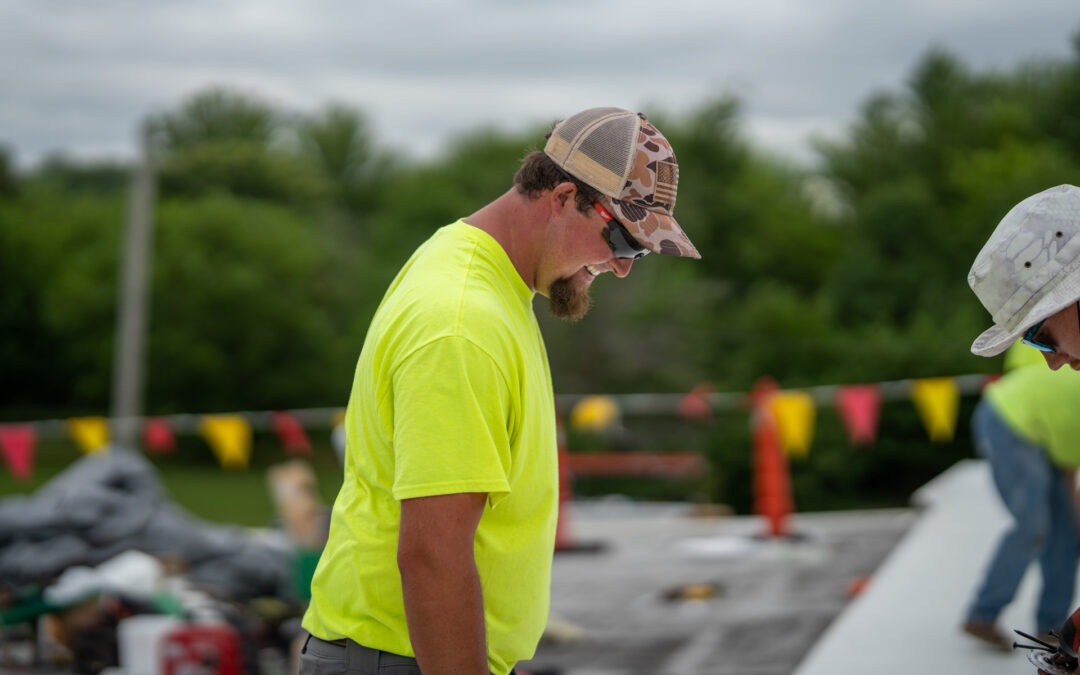
After a bad storm rolls through central Illinois, it doesn’t take long. Before you’ve even had a chance to look at your roof, someone’s knocking on your door. A truck you don’t recognize is parked out front, and a guy in a t-shirt is telling you that you’ve got damage and he can get you a new roof fast — real fast.
That situation puts you in a tough spot. You’re not sure if you actually have damage. You don’t know this person. And now there’s a clipboard in your hand.
This post is for homeowners in that exact moment. Here’s how to slow things down, ask the right questions, and make sure whoever ends up on your roof is someone you can trust.
Why This Happens After a Storm
Storm-chasing contractors are a real thing, and Illinois is not immune. After a significant hail or wind event, crews from out of state — sometimes from hundreds of miles away — will fan out across affected neighborhoods and knock on doors.
They’re not always bad people. But they’re usually working fast, moving from job to job, and they won’t be around if something goes wrong six months later.
The door-knock itself isn’t the red flag. Legitimate local companies canvas neighborhoods after storms too. The red flag is what comes next — pressure to sign on the spot, no clear answers about insurance, and no way to verify who they actually are.
What to Do When a Crew Shows Up Unannounced
You don’t have to make any decisions at the door. Here’s a reasonable approach:
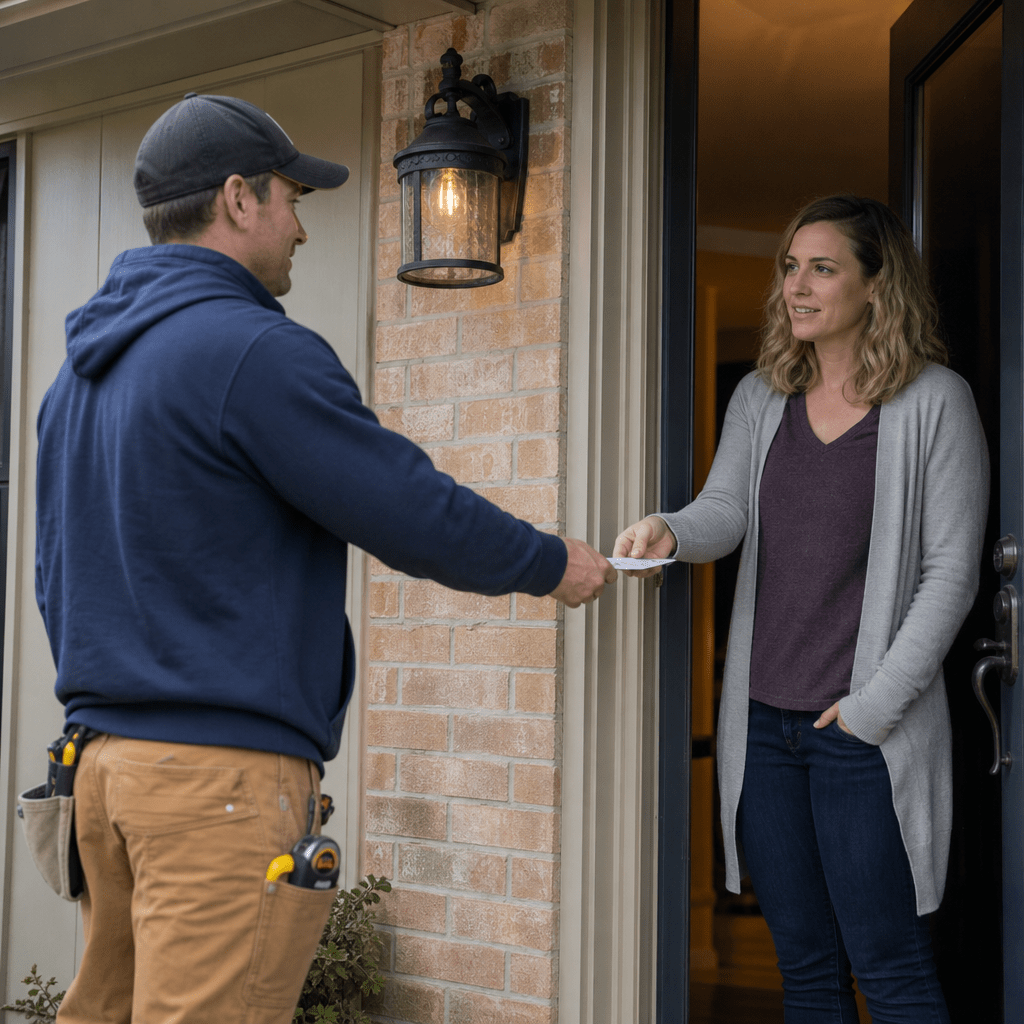
1. Ask for a business card or company name first. A legitimate contractor will hand one over without hesitation. If they’re slow to produce one, that tells you something.
2. Don’t sign anything at the door. Some contractors will present what looks like a simple “authorization to inspect” form. Read anything carefully before you put your name on it. Some of those documents are actually contingency agreements that obligate you to use that contractor if your insurance claim is approved.
3. Ask where they’re based. Are they local? Do they have a physical address in Illinois? Storm chasers are often from out of state and will leave once the work dries up in your area.
4. Look at the truck. Labeled trucks with a company name, phone number, and some kind of branding are a reasonable indicator of an established operation. A blank or magnetic-sign truck isn’t automatically a dealbreaker, but it’s worth noting.
5. Give yourself time. Tell them you’ll call if you’re interested. A contractor who won’t leave a card and give you space to think is a contractor you probably don’t want on your roof.
Red Flags That Should Slow You Down
Not every contractor who knocks is running a scam, but there are patterns worth recognizing.
- They can’t name their insurance carrier or show proof of coverage. Any contractor working on your home should be insured. Ask directly and give them a chance to produce documentation.
- They push you to “let them handle the insurance” without explaining how. There’s a real difference between a contractor who helps you understand the claims process and a contractor who wants to steer your claim. I’m a former insurance adjuster, so I’ve been on both sides of that fence. I’ll help a homeowner understand what the adjuster is looking for, what code upgrades might apply, and what the overall process looks like. But I’m not a licensed public adjuster, and I won’t cross that line. Anyone who’s blurring that boundary without explaining it clearly is worth being cautious about.
- No references, no reviews, no Better Business Bureau presence. These things take time to build. An operation that showed up after last week’s storm isn’t going to have them.
- Vague answers about the warranty. Who stands behind the work? For how long? Is it a manufacturer warranty, a workmanship warranty, or both? These are reasonable questions. You should get clear answers.
- They want a large deposit before any materials are ordered. Some deposit is normal. A large deposit before anything gets ordered or scheduled is not.
What Working With an Established Local Contractor Looks Like
When you call a contractor who’s been in your area for a while, the process is different from the jump.
Generally, the first step is an inspection — not a sales pitch. A good contractor will get up on the roof, document what they find, and show you photos. If there’s storm damage, they’ll explain what that means for an insurance claim. If the damage is minor or maintenance-related, they’ll tell you that too.
On the day of the job itself, here’s what I do: I show up with the crew first thing in the morning, talk with the homeowner, and make sure they know what to expect for the day. I introduce them to my lead man, who will be on site the entire time. Then I’ll check back around lunch and again near the end of the day. Tarps go down over the shrubbery and around the perimeter. We keep one clear path into the house so the homeowner can come and go freely. The dump trailer leaves with us at the end of the day.
I have homeowners tell me all the time that they wouldn’t have even known we were there — except for the brand new roof.
That’s the experience you should expect. If a crew can’t tell you who will be on your roof, how long the job will take, or what happens to the debris, those are gaps worth filling before anything gets started.
For more on what a well-run job day looks like, The Difference a Clean Job Site Makes During a Roof Replacement covers that in detail.
If you’re in the middle of weighing a residential roof replacement and want to understand the full process, that’s a good place to start as well.
You’re Allowed to Take Your Time
The right contractor will still be there tomorrow. If someone is making you feel like you have to decide right now, that’s information.
Get their card. Check their reviews. Ask someone you trust. And if you’d like to talk through your situation — whether you’ve got damage from a recent storm or you’re just trying to make sense of what someone told you at your door — you’re welcome to give us a call.
Frequently Asked Questions
Is it okay to let an unannounced roofing crew inspect my roof?
Generally, you can allow an inspection, but you’re not obligated to. If you do, make sure you haven’t signed anything that commits you to using that contractor before the inspection happens. An inspection should give you information — not lock you into a contract.
What’s the difference between a contractor helping with my claim and a public adjuster?
A contractor can walk you through the claims process, attend the adjuster’s site visit, and help make sure storm damage is properly documented. A licensed public adjuster negotiates on your behalf with the insurance company as a formal representative. Those are different roles. A contractor who says they’ll “handle your claim” without explaining which role they’re playing is worth pressing for clarification.
How do I verify that a roofing contractor is legitimate before I hire them?
Ask for proof of insurance — general liability and workers’ comp. Look them up with the Better Business Bureau. Check for online reviews. Ask if they have labeled trucks and a local address. Request references from recent jobs in your area. And so forth. None of these steps takes long, and a contractor who balks at any of them is giving you useful information.