
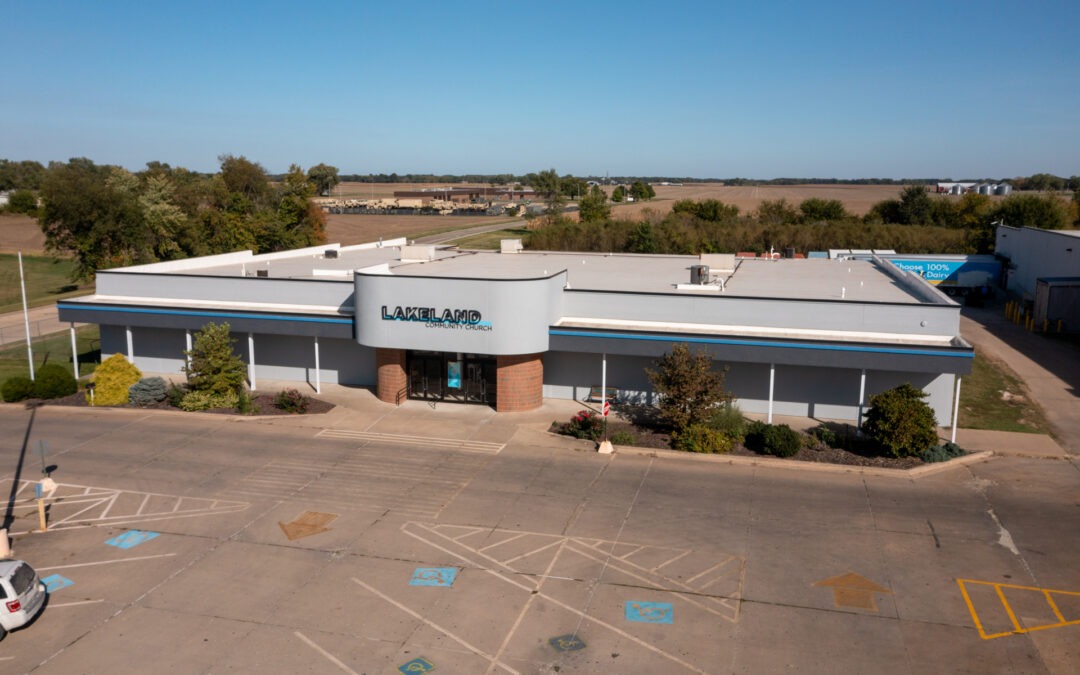
Commercial Roofing
Industrial Contractor Canton IL — What to Look for When Your Facility Needs a Roof
Looking for an industrial contractor in Canton, IL? Learn what separates a long-tenured local roofer from a crew that won’t be around for your warranty claim.
When you’re running a facility — a manufacturing plant, a warehouse, a processing building, whatever it might be — the roof is one of those things that’s kind of out of sight, out of mind until something goes wrong. And when something does go wrong, you don’t just need a contractor. You need one who knows industrial work, knows the region, and is going to be around when you need them two or three years down the road. That’s really the heart of it.
We’ve been doing this work in central Illinois for 35 years now, and a big part of what we’ve learned along the way is that industrial roofing has its own set of demands — from the scale of the projects to the scheduling constraints to the warranty considerations that come into play when you’re dealing with a commercial or industrial building. So if you’re looking for an industrial contractor in Canton, IL, or anywhere in central Illinois south of I-80, here’s what we think you should know before you make a call.
Industrial Roofing Is Not the Same as Commercial or Residential Work
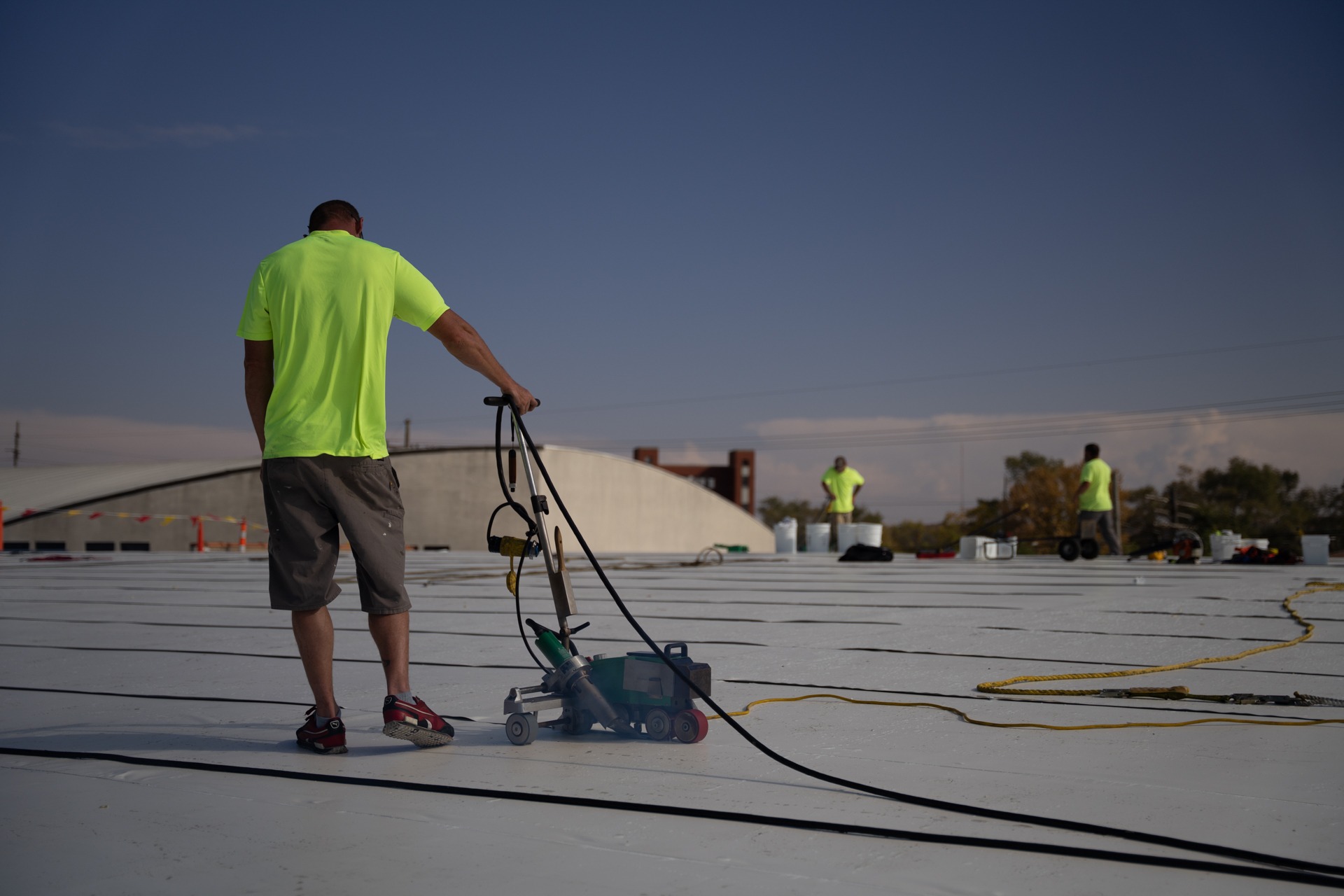
I mean, the materials overlap in some cases, but the job itself is a different animal. Industrial facilities often have large low-slope or flat roof systems — built-up roofing, TPO, or single-ply membranes like Duro-Last — that span a lot of square footage, have penetrations all over the place from HVAC units, exhaust vents, skylights, and equipment curbs, and have to hold up to foot traffic from maintenance crews. The drainage requirements are different. The load considerations are different.
And from a logistics standpoint, you know, a lot of industrial facilities can’t just shut down for a week while a crew works overhead. That affects how you schedule the work, how you sequence the tear-off, how you handle debris and noise. We work very hard to get in and out with as little disruption to daily operations as possible — that’s something that matters a lot to us, and honestly it matters a lot to the building owners we work with.
If you want to dig deeper into the flat roof side of what we do, you can take a look at our commercial flat roofing overview to get a sense of the systems and services we offer.
The Warranty Question — and Why It Matters More Than You Think
Here’s something that comes up a lot with industrial facilities, especially ones that haven’t had roofing work done in a while: the warranty situation on their current roof. A lot of material warranties cover material only — not the labor to re-install it if there’s a claim. So if something fails and you file a claim, you might get materials covered but you’re on the hook for the installation cost. Or you’ve got a pro-rated warranty where you’re only getting a percentage back based on how old the roof is. That’s a real thing that catches people off guard.
What we push for on industrial work is a contractor-backed workmanship warranty on top of the manufacturer warranty. That’s the combination that actually protects you. And the reason that matters — the reason I bring it up — is that a workmanship warranty is only as good as the contractor who issued it. If that company’s gone in three years, the warranty’s gone with them. We’ve seen that happen. That’s just the reality of working in this industry long enough.
A contractor who’s been in central Illinois for 35 years, has a local office, answers the phone — that contractor’s warranty means something. That’s not a knock on anyone in particular, it’s just a question worth asking before you sign anything.
Storm Damage, Insurance, and Code Upgrades on Industrial Buildings
If your facility took hail or wind damage — and we’ve had some serious storm cycles through central Illinois in the last decade, you know, basically every roof in the region has been affected at some point — the insurance process on an industrial building has some wrinkles to it. Code upgrades are the big one.
When a roof is damaged and needs to be replaced, local building codes may require upgrades to the new system that weren’t part of the original install. Adjusters don’t always catch those, or they don’t write them into the initial estimate. Having a contractor who knows what to look for and can advocate for those upgrades in the claim process can make a real difference in what you end up paying out of pocket. That’s something we’ve gotten pretty comfortable with over the years — working through the insurance side of industrial roofing claims, making sure the scope is right before work starts.
Maintenance Contracts — Extending the Life of What You’ve Already Got
One of the things that gets overlooked on industrial facilities is routine maintenance. A lot of building owners aren’t getting up on the roof every year to take a look, and honestly that’s understandable — it’s a big flat surface and it seems fine until it isn’t. But a maintenance contract where someone’s up there checking the seams, the penetrations, the drainage, the flashings — that kind of regular attention can add five to ten years to the life of a roof system. I’ve seen it.
For us, maintenance isn’t the biggest revenue line, but it’s how we stay connected to the building over time, and it’s how we catch small problems before they become a re-roofing conversation. If you’re in a facility you plan to operate for another 20 years, that kind of long-term thinking on the roof just makes sense from a budget standpoint.
Why Local Tenure Matters for Industrial Work
I’m not going to hammer on this too hard, but it’s worth saying once: when you’re contracting work on an industrial building — a building that represents a significant investment and a significant liability — you want a contractor who has roots in the community and will be around to stand behind the work. That’s it. That’s the whole thing.
We’re based right here in Canton. We’ve been here since the company started, and I came into it after my grandfather built it from the ground up. The service area we focus on is central Illinois, south of I-80, and we do get into Iowa and Missouri some. But central Illinois is home, and that’s not going to change.
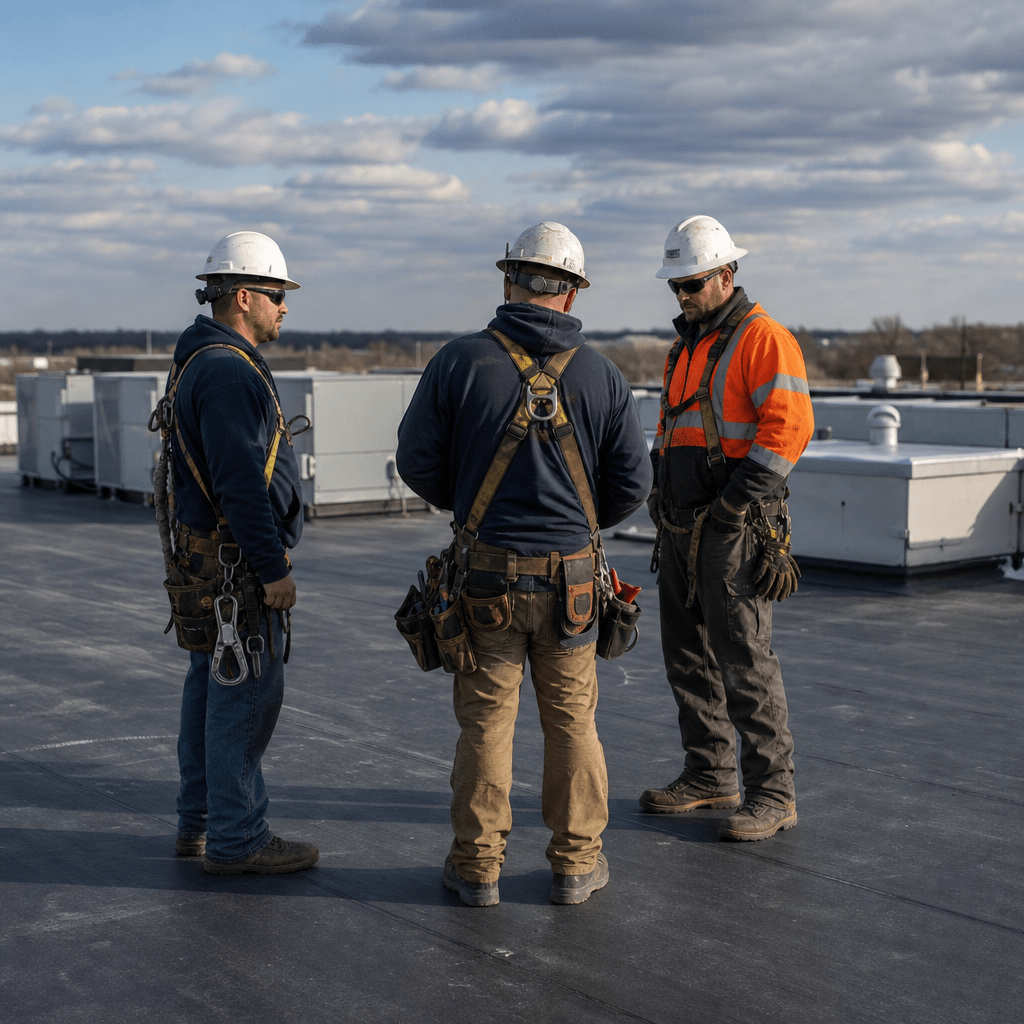
If you want to know more about how we approach roofing across different building types and systems, this post on handling multiple roof types on a single facility is worth a read.
Talk It Through With Us
If your facility is due for an inspection, has storm damage to sort out, or you just want to talk through what a maintenance plan might look like, call into the office and we’ll get you connected with the right person to work through the specifics with you.
Frequently Asked Questions
What kinds of industrial roofing systems does HCI work with?
We can work on just about any flat or low-slope system that’s already on the building — TPO, built-up roofing, modified bitumen, other single-ply membranes — when it comes to repairs and maintenance. When a roof is at the point of full replacement, what we install is Duro-Last single-ply membrane. We’re a Duro-Last Elite contractor, and it’s the system we’ve had the best long-term results with on industrial and commercial buildings in central Illinois. If you’re not sure what’s on your roof right now, that’s a conversation worth having before anything else.
How do I know if my industrial facility qualifies for an insurance claim after storm damage?
The short answer is that if you’ve had significant hail or wind in the last few years and haven’t had the roof formally inspected since, it’s worth having someone take a look. A lot of industrial roofs have storm damage that’s not obvious from the ground. We can do an inspection and help you understand what the claim process would look like, including whether there are code upgrades that should be part of the scope. Adjusters sometimes miss those, and that gap can cost you real money.
We’re in a smaller town outside Canton — do you travel for industrial roofing work?
Yes, we do. Our focus is central Illinois south of I-80, and we’ll get into Iowa and Missouri a little bit as well. If you’re not sure whether we’d come out to your area, just call the office and ask — it’s an easy question to answer, and we’re not going to waste your time if it doesn’t make sense geographically.