

You paid good money for a new roof. The crew packed up, the dump trailer rolled away, and you did a walk-around the next day. Maybe you noticed a flashing that doesn’t look right. Maybe there’s a ridge cap section that seems loose. Or a piece of trim wasn’t replaced the way you expected. You wrote it up, called the company, and got… nothing. A voicemail. A promise to “get out there soon.” And then silence.
This is a more common situation than it should be. And if you’re in central Illinois dealing with it right now, I want to help you understand your options — and what you should have been looking for before you signed on the dotted line.
Why This Happens More Than You’d Think
The honest answer is that some roofing contractors are organized around getting the job, not finishing it. Once the check clears, the urgency disappears.
This is especially common after a big storm moves through. You get companies rolling in from out of state, working fast, moving on to the next neighborhood. The nailing is rushed. The cleanup is incomplete. And when something needs to be fixed, there’s nobody local to call. That’s the storm-chaser model, and it’s a craft failure as much as it’s a business failure.
Even local contractors can fall into this trap, though. If they’re stretched thin, punch list items get pushed to the back of the line — indefinitely.
What “Punch List” Means for a Roofing Job
A punch list, in construction terms, is just the short list of items that need to be corrected or completed before a job is truly done. For a residential roof replacement, that might include:
- A section of drip edge that wasn’t installed correctly
- Pipe boot flashing that needs to be reseated
- Trim pieces that were damaged during the tear-off
- Debris in a valley or gutter that wasn’t cleared out
- A ridge vent cap that got bumped and needs to be re-nailed
These aren’t big asks. A good contractor should be able to knock those out in a short return visit. The fact that some won’t comes down to one thing: they don’t stand behind their work.
Your Options as a Homeowner in Illinois
1. Document Everything First
Before you do anything else, get your punch list in writing. Photos, dates, descriptions. If you’ve already called or texted, save those records. This creates a paper trail that matters if you need to escalate.
2. Send a Written Request
A phone call is easy to ignore. A written request — email or certified letter — is harder to brush off and creates documentation. State the items clearly. Give a reasonable deadline. Keep the tone factual, not heated.
3. Check What Your Contract Says
Pull out your contract and your warranty documents. A reputable contractor provides a workmanship warranty that covers installation errors. If they gave you one, you have something to point to. If they didn’t put anything in writing about warranty coverage, that’s a red flag that probably should have been caught earlier — but it’s still useful to know where you stand.
4. File a Complaint with the Better Business Bureau
Illinois homeowners can file a complaint with the BBB against a contractor who isn’t performing. It’s not a legal remedy, but a lot of businesses take BBB complaints seriously because it affects their standing publicly. It also creates a record.
5. Contact the Illinois Attorney General’s Office
The Illinois Attorney General’s Consumer Protection Division handles complaints about home contractors who fail to complete work or honor warranties. If you’ve made reasonable attempts to get the contractor back and been ignored, this is a legitimate next step. You can file online.
6. Consider Small Claims Court
For smaller dollar amounts, small claims court in Illinois is an option. If you had to pay someone else to fix what your original contractor left wrong, you may be able to recover that cost. You’d need your documentation — that’s why step one matters.
What This Situation Usually Tells You About the Original Hire
I’m not saying this to pile on. But most of the time, when a roofer won’t come back, there were warning signs earlier that got missed.
Did their trucks have company names on them? Did they provide proof of insurance? Did you check reviews, or ask for references from jobs they did in your area? Were they local — meaning there’s actually a phone ringing somewhere nearby when you call?
Those aren’t checklist items just for the sake of it. They’re the things that separate a contractor who’s in it for the long run from one who’s moving on to the next town. When I’m talking to homeowners about what to look for in a contractor, I usually frame it this way: you want someone you can reach on a Tuesday three months after the job is done. If you couldn’t answer that question with confidence when you hired them, that’s worth knowing for next time.
If you want a fuller picture of what the hiring process should look like, the residential roof replacement guide at Holthaus Roofing covers what to expect at each step, from the first inspection through the final cleanup.
How Holthaus Roofing Handles This Differently
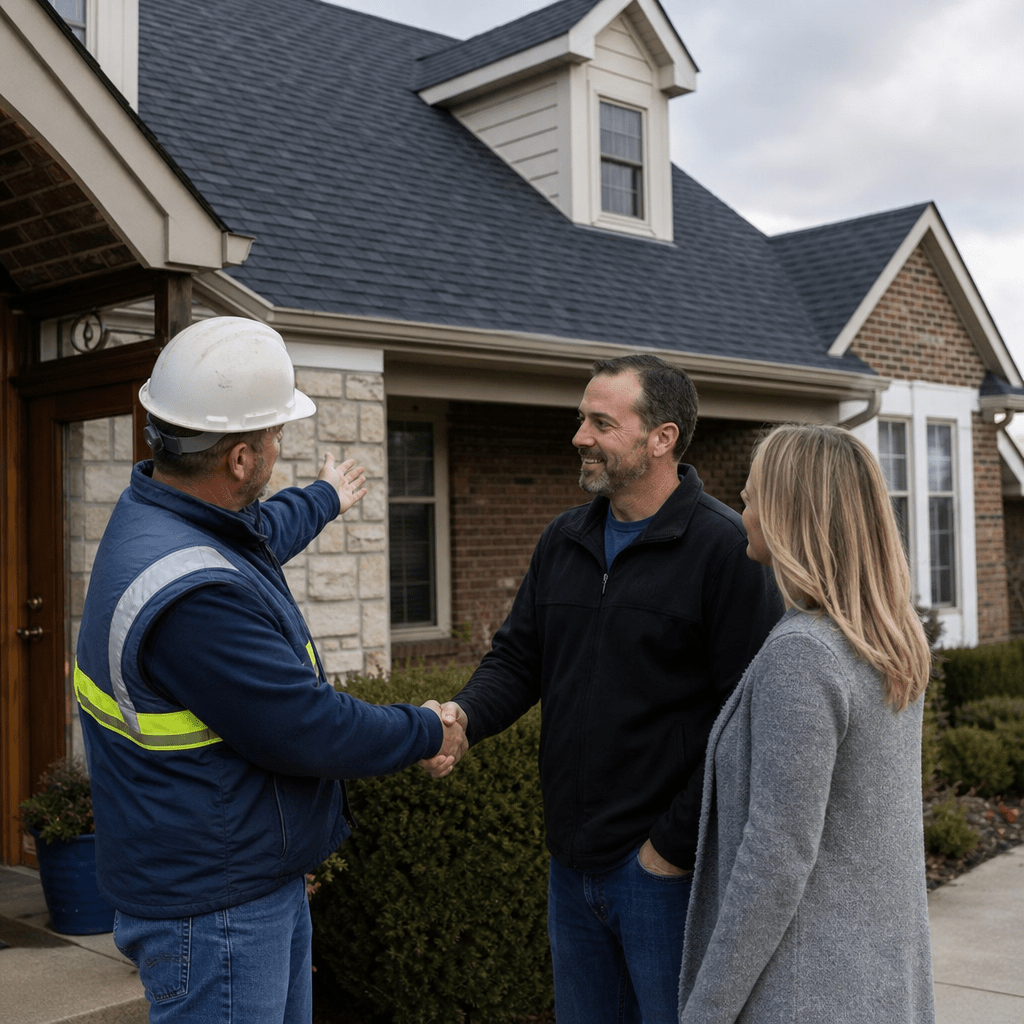
When I show up on day one, I introduce the homeowner to the lead man who’s going to be on site all day. That’s not a small thing. You know who’s on your roof. You have a face and a name. And I check back at lunch and at the end of the day — not because I’m required to, but because that’s how you make sure the job finishes right.
We bring a dump trailer that leaves with the crew. We tarp the shrubbery. We keep a clear path in and out of the house. And homeowners tell me regularly that they wouldn’t even know we’d been there, except for the new roof when they come home from work. That’s what organized looks like.
We stand behind our work with a 10-year workmanship warranty on top of the manufacturer’s coverage. If something needs to be fixed, we come back. That’s the whole point of giving a homeowner your name and your number.
For more on what a well-run job site looks like day-of, this post on what to expect during a roof replacement walks through it step by step.
If you’re dealing with a contractor who’s gone quiet and you want to talk through where you stand, give me a call. No pressure — just a straight conversation about your situation and what your options look like.
Frequently Asked Questions
What should I do if my roofer cashed my check but won’t return calls?
Start by sending a written request — email or certified letter — with your punch list items and a clear deadline. If that’s ignored, file a complaint with the Better Business Bureau and consider contacting the Illinois Attorney General’s Consumer Protection Division. Keep records of every contact attempt.
Does Illinois law protect homeowners when a contractor doesn’t complete work?
Yes. Illinois has consumer protection laws that apply to home contractors. If a contractor takes payment and fails to complete the agreed-upon work, you may have recourse through the AG’s office or small claims court, depending on the dollar amount involved. Having a written contract and documentation of the incomplete items strengthens your position considerably.
How do I avoid this situation on my next roofing project?
Look for a contractor with labeled trucks, verifiable insurance, local references, and a workmanship warranty in writing. Check their BBB standing and online reviews. Ask directly: if something needs to be corrected after the job, who do I call and what’s the process? A contractor who’s organized and local — and plans to still be in business when you need them — will answer that question without hesitating.