

There’s something nobody really talks about when you’re planning a roof replacement. You’ve picked your shingles, you’ve scheduled the crew, you’ve made arrangements for the dog. And then it’s over — crew’s gone, the dump trailer’s pulled out, the roof looks great.
But somewhere in your grass, your driveway, your flower beds — there are nails.
It doesn’t happen because anybody was careless on purpose. It happens because a residential re-roof generates hundreds of nails. Old ones pulling out of the decking, new ones that miss their mark, staples, roofing caps. They land in grass, they settle into gravel, they hide in mulch. And if you don’t have a crew that takes cleanup seriously, you’re going to find one with a tire or a bare foot before too long.
I’m Craig Stafford, steep slope manager here at Holthaus Roofing. I’ve run a lot of residential jobs in Central Illinois, and nail cleanup is something we treat as part of the job — not an afterthought. Let me walk you through what a thorough process actually looks like, and what to ask about before you sign anything.
Why Roofing Nail Scatter Is a Real Problem
When a tear-off starts, the old nails and fasteners come off with the shingles. Gravity does its work. Some nails stick to the shingle, go into the dump trailer, and that’s the end of it. But plenty of them separate on the way down. They land in the gutters, they bounce off fascia boards, they slide into landscaping.
New installation creates its own scatter, too. A pneumatic nailer misfires. A nail skips off a hard shingle surface. It happens on every job. That’s not a quality failure — that’s physics. The quality question is what you do about it when the day is done.
And the consequences are real. A nail in a car tire runs you a couple hundred dollars easy — more if it damages the sidewall. A nail through the bottom of a foot is a trip to urgent care. For homeowners with kids or dogs, the yard isn’t abstract. It’s where people live.
What a Thorough Nail Cleanup Actually Looks Like
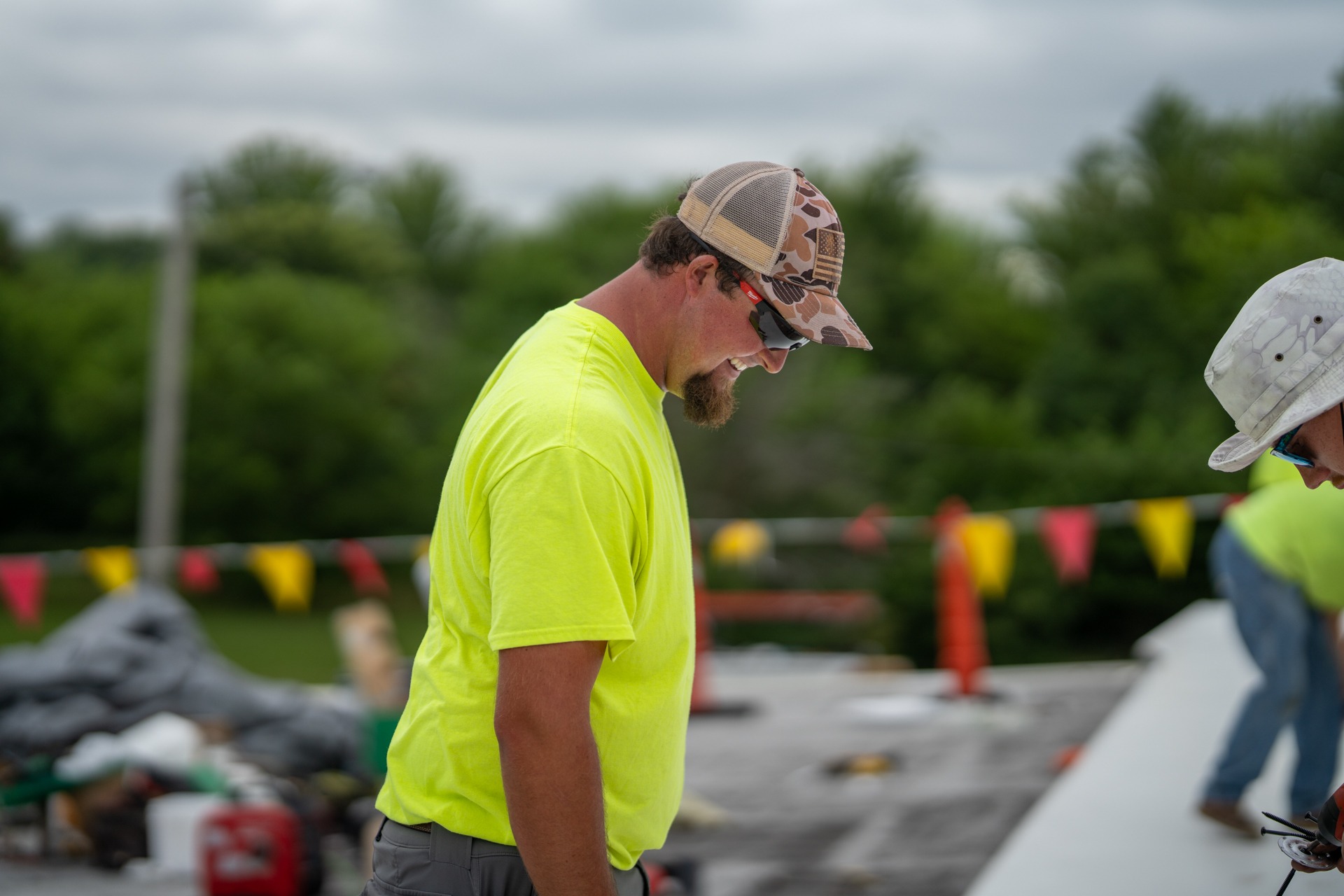
Here’s what we do on every residential job.
Tarps come down first. Before the tear-off even starts, we spread tarps around the perimeter of the house — around the shrubs, under the eaves, in the plant beds. This gives us a collection surface. When we’re done, we roll those tarps up and the debris goes with them. A lot of nails that would’ve disappeared into mulch end up on the tarp instead. It’s a simple move, but it matters.
The dump trailer leaves with the crew. We’re not leaving a pile of old shingles and debris sitting in your driveway overnight. Waste gets loaded into the trailer throughout the day, and the trailer goes with us. That includes the bulk of the nail scatter from the tear-off.
Magnetic rollers go around the perimeter. After the debris is cleared, we run a rolling magnetic sweeper around the foundation line, across the driveway, and through the areas adjacent to the structure. These tools pick up ferrous metal — nails, staples, roofing tacks — that you’d never see by eye. They’re not optional in our process.
We walk the yard. The magnet roller handles the hard surfaces and short grass well. But for landscaping beds, mulched areas, and tight corners near the foundation, we do a visual walk. You can’t magnet-sweep through boxwoods. You have to look.
Check-in at end of day. I’m back on site toward the end of the day on every job. Part of what I’m looking at is the cleanup. If the crew hasn’t run the magnet or the tarps are still down, we address it before we leave. That’s what a check-in is actually for.
For more on what the full day-of experience looks like, including how we set up the site and keep a path clear to your front door, see What to Expect During a Roof Replacement: A Homeowner’s Guide.
Questions to Ask Any Contractor Before the Job Starts
This is where I’d encourage every homeowner to slow down a little before signing. Nail cleanup isn’t usually in a written estimate — it’s assumed. But the assumption covers a lot of ground, and not every crew treats it the same way.
Ask these before you commit:
Do you use magnetic rollers? This should be a yes with no hesitation. If they pause, that’s a signal.
Do you use tarps in the work area? Again, yes or no. Tarps under the eave line catch a huge percentage of the nail scatter before it has a chance to disappear.
Does your dump trailer leave the same day? Some contractors stage debris overnight or across multiple days. That’s a sign of how the overall job is managed, not just cleanup.
Who’s on-site from your company all day? On a Holthaus job, I introduce the homeowner to the lead man at the start of the day. That person is accountable — they’re not an anonymous subcontractor. Knowing who to talk to if something looks off matters.
You can find a fuller breakdown of what makes a job site well-managed at The Difference a Clean Job Site Makes During a Roof Replacement.
The Bigger Picture
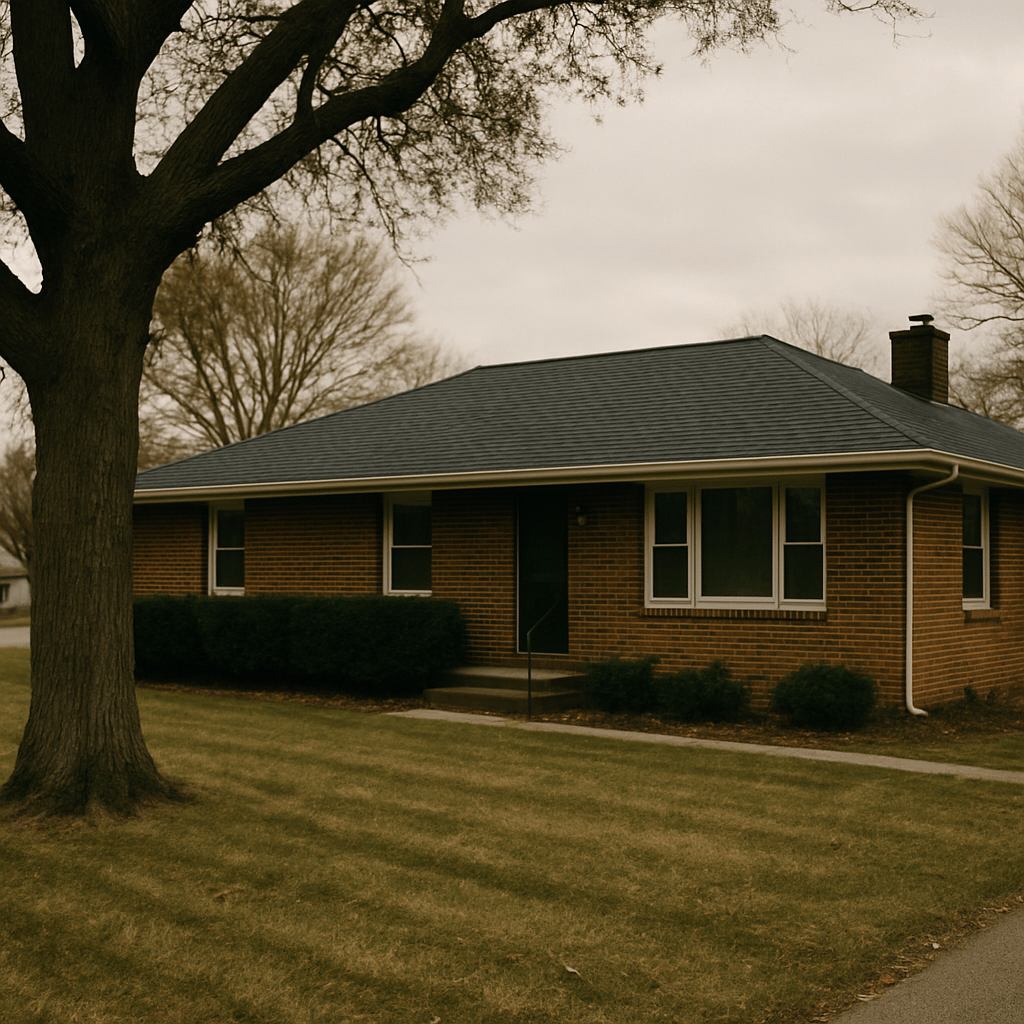
Nail cleanup is one piece of what separates a well-run residential job from a rough one. It’s not glamorous. Nobody’s going to put “we swept the driveway” on a billboard. But homeowners notice when it’s done right — and they really notice when it isn’t.
I have customers all the time who tell us they wouldn’t even know we were there, except for the brand new roof on the house when they come home from work. That’s the goal. In, done, clean, out — and nothing left behind except the roof.
If you’re thinking through a roof replacement in Central Illinois, that standard starts before the first shingle comes off.
FAQ
How do magnetic rollers work, and do they really pick up all the nails?
Magnetic rollers use a rolling magnet head — basically a wide magnetic bar on a push-handle — to attract ferrous metal off hard and semi-soft surfaces as you walk. They catch the majority of nails on driveways, short grass, and around foundation areas. They’re not perfect in deep mulch or dense ground cover, which is why we also do a visual walk in landscaping beds. The combination of tarps, the magnet, and a manual check covers most situations.
My neighbor used a different contractor and ended up with nails in the grass for weeks. Is that common?
More common than it should be, unfortunately. Some crews treat cleanup as whatever’s left over after the installation is done. If the job ran long or the crew is moving to the next site the next morning, it gets cut short. That’s part of why I ask about the crew’s process before we ever start — and why I check back at end of day myself.
What should I do before the crew arrives to help protect my yard?
A few things help. Move cars out of the driveway if you can — it gives us more room to work and keeps them out of the debris zone. If you have lawn furniture or potted plants close to the house, move them away from the foundation. And if you have a dog, keep them inside or in a fenced area away from the work zone during the day. We’ll handle the rest.