
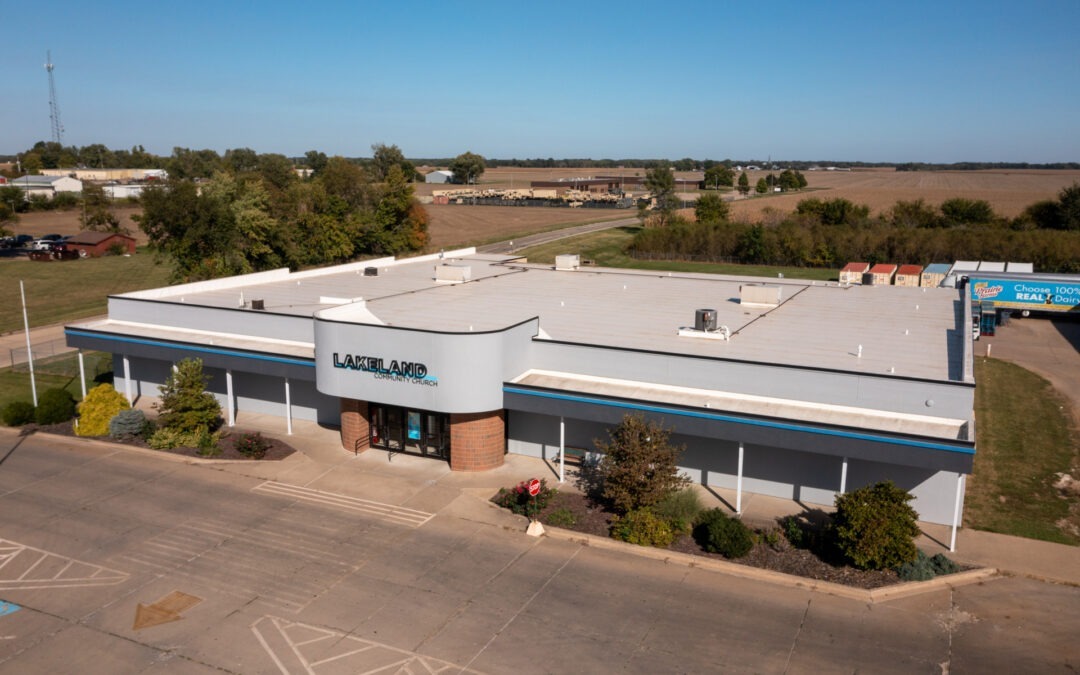
You closed the deal on a new commercial roof — or maybe you’ve had one for a few years now. Then something happens. A storm blows through. An HVAC tech knocks something loose. A drain backs up and suddenly there’s water where water shouldn’t be. You call your roofing contractor.
What happens next is where a lot of contractors separate themselves. Not by what they promise on the front end. By what they actually do when you pick up the phone.
This is the part I own. Once the sale is done, it gets turned over to me — scheduling, logistics, diagnosis, execution. Here’s what follow-up repairs actually look like when they’re done right.
Your Roof May Not Be the Problem
This sounds strange coming from a roofer, but it’s true. I’ve been on more repair calls than I can count where we get there and it’s not the roof leaking at all.
A restaurant roof, for example — a storm comes through and blows the top off an exhaust fan. Now it’s wide open. Every time it rains, water runs straight down into the kitchen. You’d swear the roof is leaking. It’s not. The roof is fine.
Or an AC condensate line gets clogged. It backs up into the drain pan, the pan overflows, and now there’s water showing up inside your building. We get called out, we look at it, and we tell you: your AC line is clogged. Not the membrane. Not the flashing. The condensate line.
That’s the diagnosis. That’s what you need — somebody who’s going to tell you the truth about what’s actually happening, not just patch something to get off the job.
So the first thing a follow-up repair should do is find the real source. Not just treat the symptom.
What Happens When We Show Up
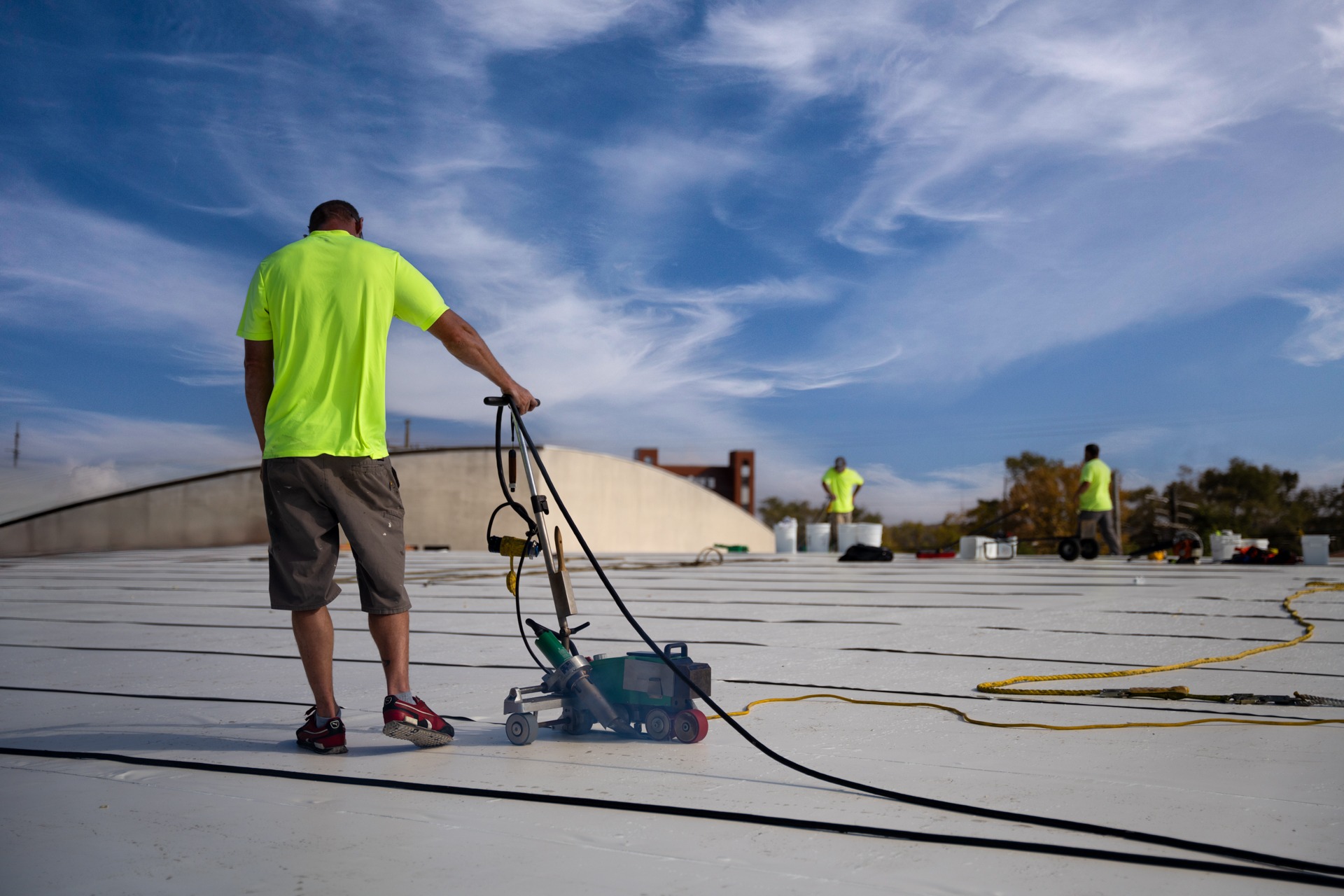
Once I’ve got a repair call, I’m looking at a few things before we ever get to the roof.
What’s inside the building? A hospital is different from a warehouse. An MRI machine, a server room, a restaurant walk-in cooler, an ER — those are all different conversations than an open-bay mechanic shop. Your business is your business. That’s your livelihood. We take that seriously.
What’s the access situation? Commercial buildings are not all the same. Some roofs need a crane to get material up. Some are in a tight downtown location where we have to block off a street or work around a parking lot. I’m thinking through that before we roll a truck.
What are your hours? If you’re a school, we’re probably not showing up the first week of September. If you’re a dealership that’s closing deals on Saturday, I’m not putting a crew over your showroom and running generators. We want to stay in the shadows. We don’t want you to know we’re even there — or at least, we want it to be as close to that as possible.
The goal is zero disruption to your operation. That’s the frame I work from on every repair call.
Duro-Last Makes Repairs More Consistent
If your roof is a Duro-Last membrane, follow-up repairs have an advantage that matters. The material is prefabricated at the manufacturer. That goes for the original install — boots, curb flashings, all of it made to the exact measurements I send up — and it carries into repairs too.
We’re not out on the roof trying to fabricate something from scratch. The parts are made in a controlled environment. That takes the human error out of it. It’s faster. It’s more consistent. And it’s weather-resistant in a way that field-fabricated repairs can’t always match.
Our guys work with this material every day. They’re not jumping back and forth between different systems. They know Duro-Last. That’s the reason they’re good at repairs — not just installs.
For more on how our material choice shapes the whole commercial roofing process, see our commercial flat roofing overview.
The Maintenance Plan: Catching Problems Before They’re Repairs
A lot of what becomes an emergency repair call didn’t have to be one.
I run a maintenance plan for our commercial customers. Twice a year — spring and fall — we’re up on your roof. We’re cleaning drains and gutters. We’re checking caulking around penetrations. We’re looking at flashings. We’re photographing anything that’s showing wear.
That’s not just a service call. That’s documentation. When I hand you a report that says your roof has maybe three years of useful life left on a certain section, now you can go to your board or your ownership group and say: here’s what we know, here’s when we need to budget for it. That’s different from getting a surprise leak in the middle of January and scrambling.
A couple-hundred-dollar issue caught in October doesn’t become a $5,000 problem in February. That’s the whole reason the plan exists.
If you’re wondering whether a maintenance agreement makes sense for your building, that’s a conversation worth having — especially if your roof is getting some age on it. See also what to ask about commercial roof warranty coverage before assuming you’re fully protected.
We Answer the Phone
I know that sounds basic. It shouldn’t need to be said. But I’ve talked to enough building owners and facility managers who’ve had the experience of calling their roofer after a storm and hearing nothing back for three days.
We answer every call. If it’s an emergency — water coming in on an occupied building — we’re figuring out how to get there. That’s not a pitch. That’s just how we operate.
If you’ve got a roof that’s acting up, or you’ve had water inside your building and you’re not sure if the roof is actually the culprit, give us a call. We’ll talk through what you’re seeing and help you figure out what the next step actually is.
Frequently Asked Questions
How quickly can you respond to a commercial roof repair in Central Illinois?
For active leaks on occupied buildings, we move as fast as we can — same day or next day in most cases, depending on where we’re at with weather and crew scheduling. I’m up at 4:30 every morning checking weather, so I’m already thinking about what the day looks like before most people are awake. If it’s not an emergency, we’ll get you on the schedule and I’ll make sure you know the timeline.
What if the water I’m seeing inside my building isn’t actually a roof leak?
That’s more common than most people think. We’ve been on calls where the issue turned out to be a clogged AC condensate line, a blown exhaust fan cap, or a clogged drain backing up onto the roof deck. Our guys will diagnose what’s actually happening. If it’s not the roof, we’ll tell you that and point you in the right direction.
Do you offer follow-up repairs on commercial roofs you didn’t originally install?
That depends on the system. We specialize in Duro-Last, so repairs on those roofs are where we’re most effective. If it’s a different membrane — TPO, EPDM — it’s worth a conversation. We can take a look and tell you what we’re seeing. The commercial flat roofing page is a good starting point if you want to understand how we approach different systems.