

Storm Damage & Insurance
How a Roofing Contractor With Adjuster Experience Can Help You Through an Insurance Claim in Illinois
If you’re filing a storm damage insurance claim in Illinois, a roofing contractor who’s worked as an adjuster can help you understand the process and get a fair result.
Filing an insurance claim after storm damage can feel like trying to read a contract in a foreign language. You know something’s wrong with your roof. You know a storm just came through. But between the adjuster’s visit, the scope of loss document, the depreciation holdback, and the contractor estimates — it can get overwhelming fast.
That’s a situation I’ve walked homeowners through more times than I can count. I’m Craig Stafford with Holthaus Roofing. I am the steep slope manager here, and before I was on this side of the fence, I was a licensed insurance adjuster. That background shapes just about everything I do when I’m standing on a roof after a storm. If you want to understand what that means for you as a homeowner dealing with a claim in central Illinois, keep reading.
Why the Insurance Claims Process Feels So Confusing
The claims process has a lot of moving parts. You’ve got the insurance company on one side, an adjuster they send out, a scope of loss they produce, and then you — the homeowner — trying to figure out whether what they’re offering is actually enough to cover a proper repair or replacement.
Most roofing contractors come at this from one direction only. They know roofing. They can tell you what it costs and what it takes to fix. But they haven’t sat on the other side of the table, gone through adjuster training, or written a scope of loss themselves. That gap matters. Generally, when I meet a homeowner on a storm claim, they don’t fully understand what’s in that document the adjuster produced — and sometimes the adjuster has missed things too.
That’s not me saying adjusters are out to get you. They’re not. But they’re also covering a lot of ground, especially right after a major storm event. Things get missed. And if nobody’s advocating for what’s actually on that roof, those missed items don’t get added back in.
What “Been on Both Sides of the Fence” Actually Means for You
When I show up to walk a roof with an adjuster after storm damage, I’m not just pointing at shingles. I know how a scope of loss is structured. I know what line items should be there — the code upgrade allowances, the drip edge, the ice-and-water shield requirements under Illinois code, and so forth. I know how to have a conversation with an adjuster that moves things forward instead of creating friction.
I want to be clear about one thing, though: I’m not a public adjuster. I’m not going to negotiate your claim as a licensed public adjuster or step into that role — that’s a line I won’t cross, and honestly, it’s a slippery slope I don’t want to go down. What I will do is be present when the adjuster walks the roof, make sure nothing legitimate gets overlooked, and help you understand what’s in the scope so you can ask the right questions.
That’s a different kind of help than most roofing contractors can offer. And in my experience, it makes a real difference for homeowners who feel like they’re just guessing their way through the process.
For a broader look at what we cover when storm damage is involved, you can start at our complete storm damage and insurance claims guide.
What to Expect When You Call Us After a Storm
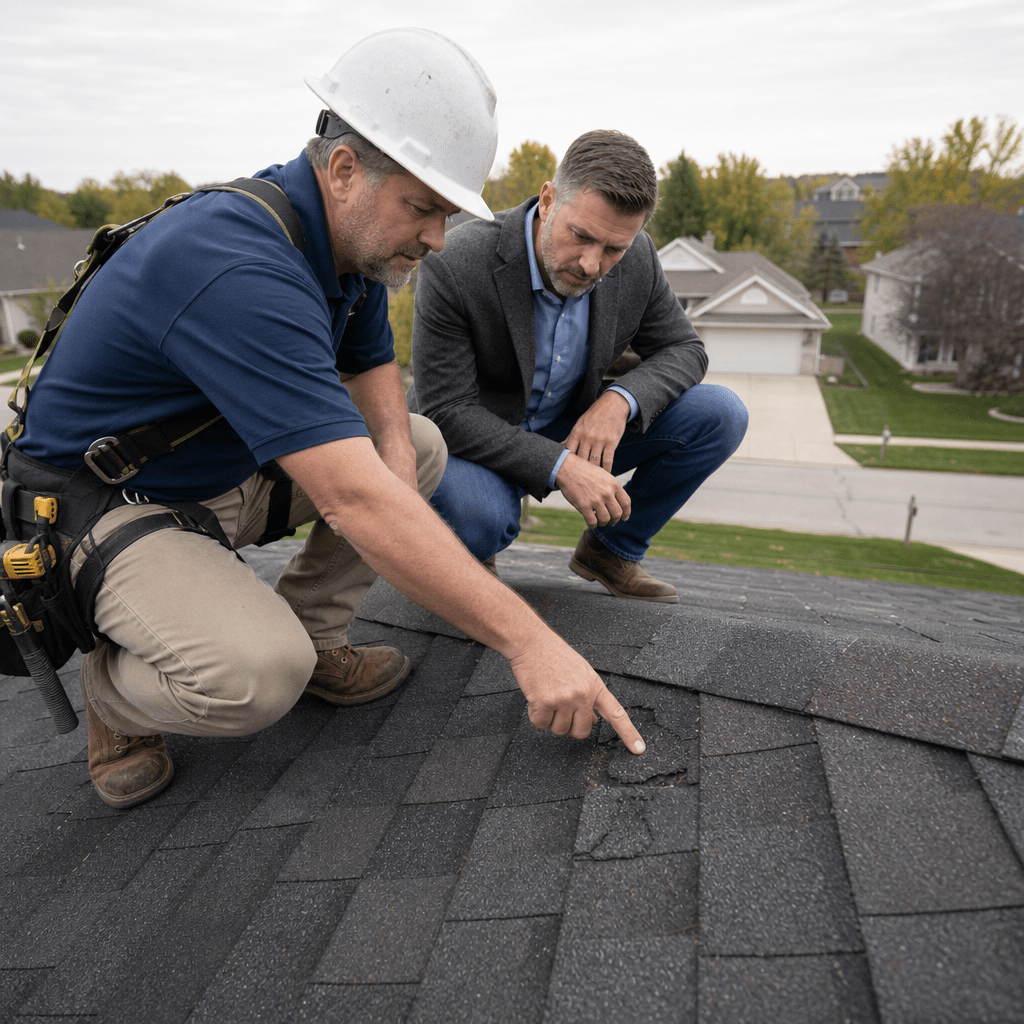
Here’s roughly how it goes. You call, we set up an inspection. I’ll get up on the roof and look at what we’ve actually got — granular loss, impact marks on the ridge cap, soft metal damage on vents and flashing, and so forth. Granular, by the way, is the crushed rock coating on the surface of the shingle that protects the asphalt underneath. Granular loss from hail impact looks different than granular loss from age, and knowing the difference matters when you’re documenting a claim.
From there, if a claim makes sense, I’ll help you understand how to get the adjuster scheduled and what to expect from that visit. I’ll be there when they walk it if at all possible. We’ll go over what they find together.
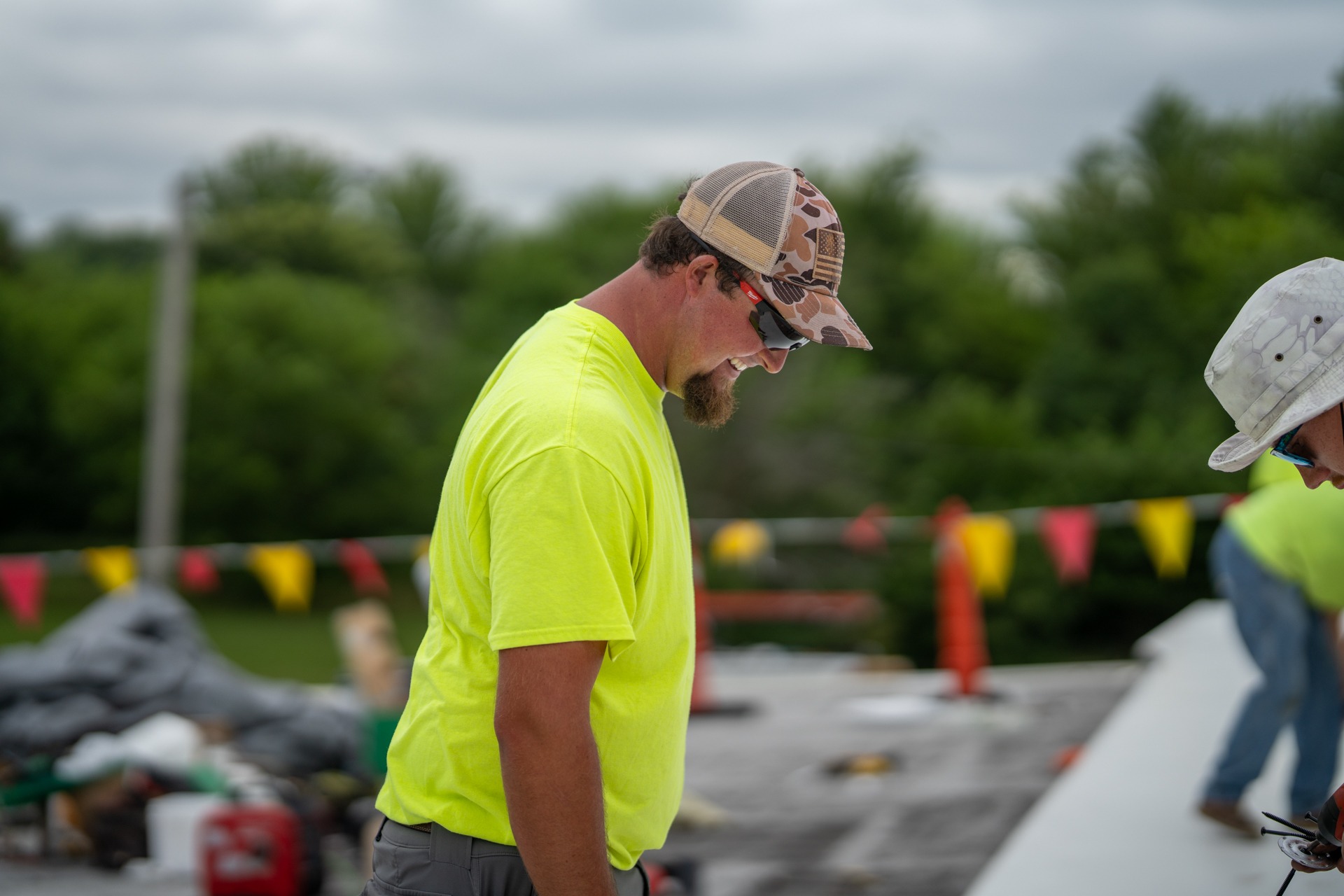
Once the claim is approved and you’re ready to move forward, I show up with the crew on the day of the job. I’ll introduce you to my lead man — he’s the one who’s going to be there all day, and you should know who that is before I leave the site. I check back in around lunchtime and again toward the end of the day. When the crew leaves, the dump trailer goes with them. Tarps go over the shrubbery while we’re working to keep the debris manageable. We try to preserve one clear path in and out of your house throughout the day.
The goal is that when you come home, you’ve got a new roof and you’d barely know we were there — except for the new roof.
Choosing a Contractor for a Storm Claim: What to Look For
Not every contractor who shows up after a storm is someone you want handling your roof and your claim. After a significant weather event, you’ll see out-of-state trucks rolling through neighborhoods. Some of those crews do fine work. Others are in a hurry — on to the next roof, the next storm, the next town. Shingles nailed in the wrong exposure, improper fastener placement, no one around to stand behind their work six months later. That’s the pattern I see when we’re called to fix what someone else did.
When you’re vetting a contractor for storm work, make sure they’re insured, that they have verifiable local references, that their trucks are labeled, and that they’ve got a track record with the Better Business Bureau. Ask whether they’re planning to be around when you call back in two years with a question. A contractor who’s in it for the long run will answer that question differently than one who’s here for the storm season.
You can read more about what to watch for in Red Flags to Watch Out for When Hiring a Roofer.
We Work With Homeowners Across Central Illinois
Central Illinois gets its share of hail, straight-line wind events, and the occasional tornado. If you’ve had damage and you’re trying to figure out where to start — with the claim, with the contractor selection, with any of it — you’re welcome to call and just talk through your situation. There’s no pressure, and I’m happy to answer questions before we’ve even set up an inspection.
Talk It Through With Us
If you’d like to talk through what you’re dealing with, give us a call. I’ll do my best to help you make sense of where you are in the process.
Frequently Asked Questions
Does having a roofing contractor present during the adjuster’s inspection actually make a difference?
Generally, yes — especially if the contractor has claims experience. An adjuster is moving fast, covering a lot of properties. Having someone on the roof who knows what to document and how to communicate it in terms the adjuster recognizes means less chance of legitimate damage being overlooked. I’ve been in situations where line items got added to the scope on-site because I was there to point them out. That doesn’t happen if it’s just the adjuster and an empty roof.
Will my insurance company have a problem with my contractor being present during the inspection?
Usually not. The adjuster is there to assess the damage, and having your contractor present is a normal part of the process. What I’m not doing is acting as a licensed public adjuster — I’m there as your roofing contractor, making sure the scope reflects what’s actually on the roof. If you ever have a specific question about your policy language, that’s worth a call to your agent directly.
What if the adjuster’s scope doesn’t match what my contractor says needs to be replaced?
That’s actually pretty common, and it’s not always a problem — sometimes it’s a matter of documentation and a follow-up conversation. If there are items on the roof that were missed, we can request a supplemental review and provide documentation to support it. I’ve done this many times. The process takes a little longer, but it’s the right way to make sure the work that gets approved actually covers what your roof needs. I’d loop in Nick on anything that starts to get into broader insurance strategy territory, but for the roof scope itself, that’s squarely what I handle.