
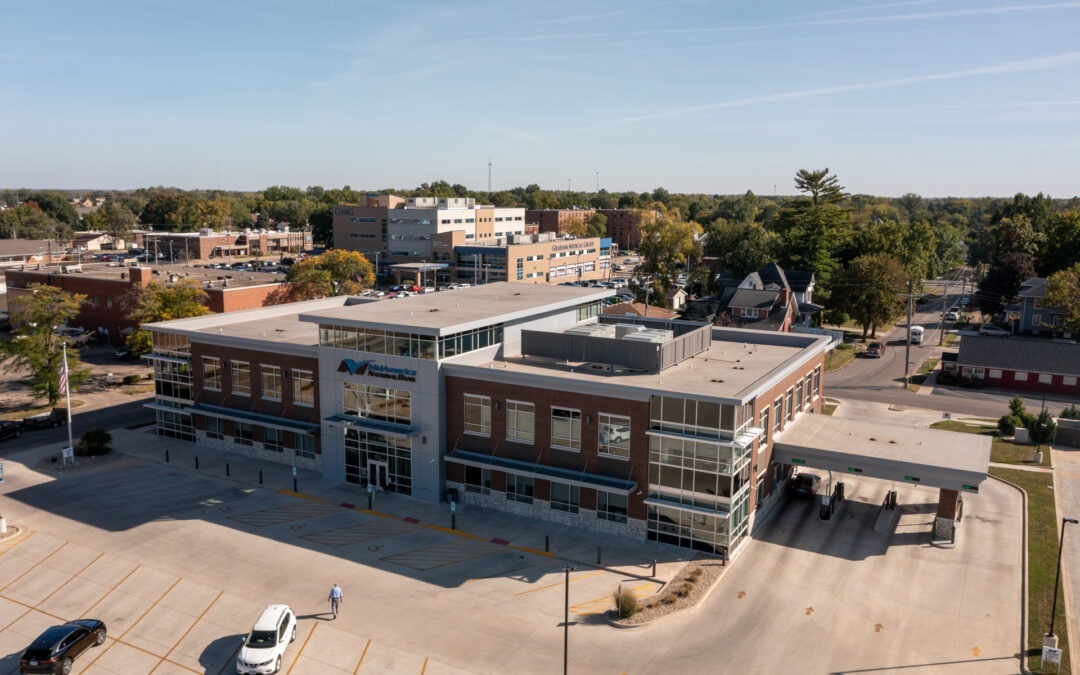
You’re not thinking about your roof — and honestly, that’s kind of the point. A flat commercial roof is out of sight, out of mind, and that’s usually fine right up until it isn’t. Then you’ve got a leak dripping onto inventory, a maintenance call during business hours, or an insurance adjuster on the phone asking questions you don’t have answers to.
If you manage or own a commercial building in Canton, central Illinois, or anywhere south of I-80, the questions you’re probably asking aren’t about roofing systems in the abstract. They’re more like: Who do I actually call? How do I know the warranty is worth anything? What’s this going to cost my tenants or my staff while the work is happening?
Those are the right questions, and they’re worth answering.
Flat Roofs Are a Different Animal
Most commercial buildings in central Illinois — schools, nursing homes, municipal facilities, warehouses, churches — are running some version of a low-slope or flat roof system. That’s a different world from residential shingles, you know, and a contractor who’s great at one isn’t automatically qualified for the other.
For flat roofing, the issues that matter most are membrane integrity, drainage, and what happens at the seams and penetrations. A leak on a flat commercial roof rarely looks like what you’d expect — water travels, and by the time you’re seeing damage on the inside, the entry point on the membrane could be 20 feet away.
If you want a broader overview of flat roofing options for central Illinois buildings, the hub page covers the full picture.
The Warranty Conversation Nobody Has Until It’s Too Late
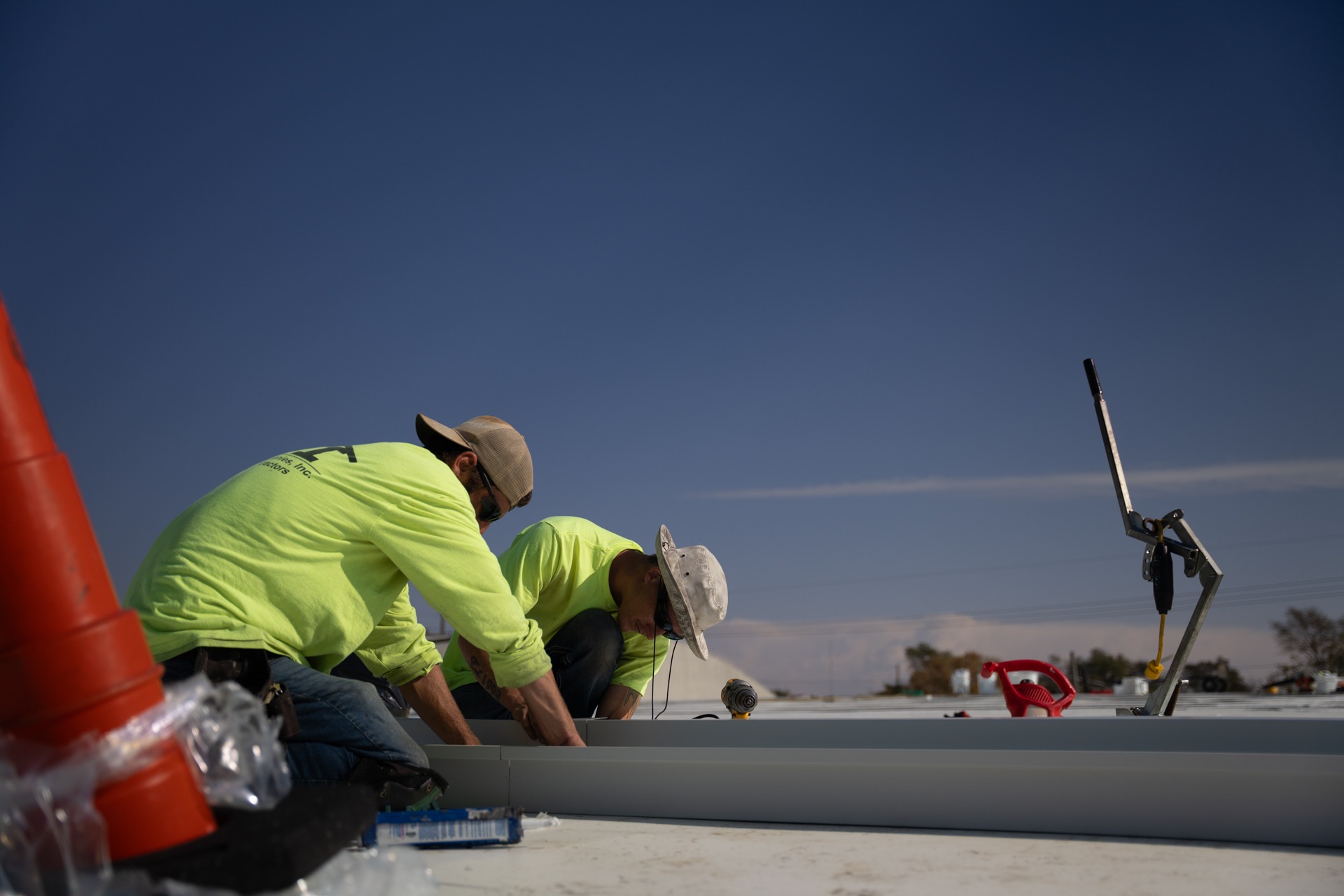
One thing we’ve seen a lot over the years — building owners get a roof put on, they get paperwork that says “20-year warranty,” and then they feel like they’re covered. Sometimes they are. Sometimes they’re not, and the difference matters a lot.
A lot of material warranties are material-only, meaning if you have a claim, the manufacturer covers the replacement material but not the labor to install it. Or it’s a pro-rated warranty, where after a certain number of years you’re only getting a percentage of the original project cost back. That’s a big deal when you’re talking about a commercial roof.
What you actually want is a warranty that covers both the materials and the workmanship — and you want it backed by a contractor who’s going to be around when you need to file a claim. That’s where the storm-chaser problem comes in. There are contractors that will come through after a weather event, do a bunch of work, and then they’re gone. Their warranty is only as good as their local presence, and if they’ve moved on to the next market, you’re on your own.
We’ve been in this market for 35 years — Canton, Fulton County, the surrounding area. That’s not a marketing line, that’s just what it means to be a local contractor who has to stand behind the work when the building owner calls back in year five or year eight.
For a closer look at what questions to ask before signing off on a commercial roof warranty, this post breaks it down.
Getting the Work Done Without Shutting Your Building Down
One of the things that tends to matter a lot to commercial building owners — especially schools, healthcare facilities, and anyone running a business out of their building — is how invasive the installation process is. You’ve got people inside. You’ve got operations happening. You can’t necessarily hand over your building for a week and walk away.
That’s something we work very hard on from the standpoint of how we approach a commercial job. The roofing systems we install are designed for low-noise, low-debris application — the kind of thing where, in a lot of cases, you can knock out a job without the people inside even knowing it’s happening. That’s not always possible on every project, but it’s the target, and it shapes how we plan the work.
For downtown Canton buildings, older historic structures, or jobs where logistics are complicated — cranes, narrow streets, 150-year-old masonry — that planning piece gets even more important. We’ve done a fair amount of that kind of work, and the complexity of it doesn’t change the goal, which is to make the process as easy as possible for the people who have to keep using the building while we’re on it.
Maintenance Is Cheaper Than Replacement — By a Lot
Most commercial roofs that fail before they should weren’t bad roofs. They were roofs that didn’t get looked at. A flat commercial roof can add five to ten years of useful life with a regular maintenance plan — catching small membrane issues, clearing drains, resealing penetrations before they become actual leaks.
The thing is, most building owners don’t have someone going up on their roof regularly, because there’s no obvious reason to until something goes wrong. That’s the out-of-sight problem again.
A maintenance plan is also, frankly, a way to build a relationship with a contractor over time so that when you do need a major repair or a full replacement, you’re not starting from scratch trying to figure out who to call and whether you can trust them. You’ve got history.
When Insurance Is Involved
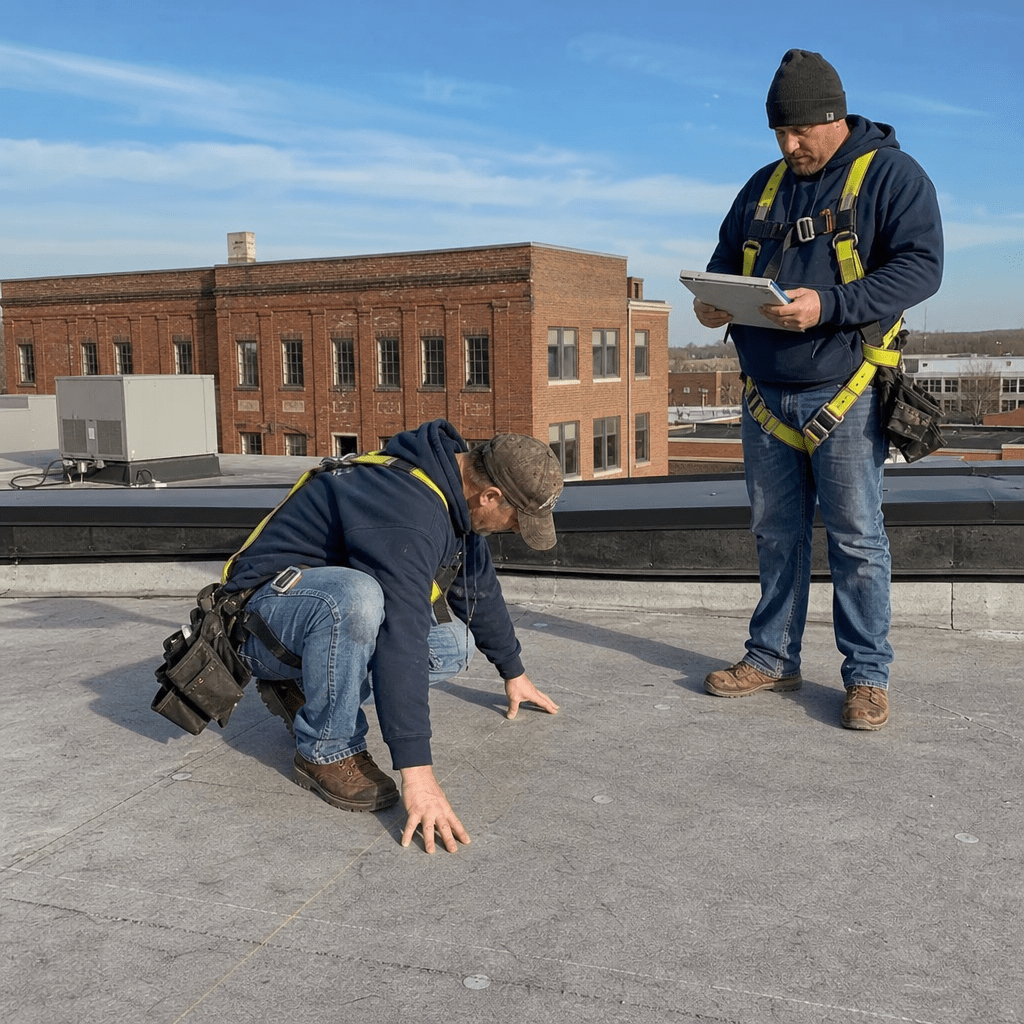
Hail and wind events move through central Illinois regularly, and when they do, the claim process is where a lot of building owners run into trouble. Adjusters work for the insurance company — they’re not your advocate. There are code upgrades that apply when a commercial roof is replaced after storm damage, and those don’t always show up automatically in an adjuster’s estimate.
Having a contractor who knows what to look for and how to document it correctly can mean the difference between a claim that covers what it should and one that leaves you paying for items that were legitimately part of the job. That’s an area where experience in the market — knowing the local adjusters, knowing the code requirements in central Illinois — actually matters.
If you want to understand where overlooked details in this process can turn into real costs, this post on a common commercial roofing mistake is worth reading.
If you’ve got questions about a specific building — flat roof, historic structure, insurance claim, maintenance, whatever it is — call into the office and they’ll get you in contact with the right person to get the process started. There’s no pressure, just a conversation about what you’re dealing with.
Frequently Asked Questions
How do I know if my commercial flat roof needs to be replaced or just repaired?
That’s honestly something you can’t answer from the ground, you know — flat roofs don’t show damage the way a pitched residential roof does. A proper inspection is the starting point. In a lot of cases, a roof that looks bad from the inside has isolated membrane damage that’s repairable rather than requiring a full tear-off. But there are also roofs that have been patched so many times that replacement is the more cost-effective call in the long run. The inspection will tell you which situation you’re actually in.
What commercial roofing systems do you install in the Canton area?
We work primarily with single-ply membrane systems on commercial flat roofs — systems that are designed for durability, ease of maintenance, and low-noise installation. The specific system that makes sense depends on the building, the existing roof condition, and what the building owner needs from a warranty standpoint. That’s a conversation worth having before any decisions get made.
How long does a commercial roofing project typically take?
It varies, but for most mid-sized commercial flat roofs the goal is to get in and get out as efficiently as possible, with as little disruption to the building’s operations as we can manage. Some jobs are done in a day; larger or more complex projects obviously take longer. The planning conversation before we start is where we work through what the timeline looks like and what it means for whoever’s using the building.