

Storm Damage & Insurance
How Illinois Weather Wears Down Your Roof Year After Year
Illinois weather hits your roof from every angle — hail, ice, summer heat, and freeze-thaw cycles. Learn what to watch for and how to stay ahead of damage.
You bought your house. You put a good roof on it. And then Illinois decided to run it through the full gauntlet — hailstorms in May, brutal heat in July, ice dams in February, and freeze-thaw cycles every single spring. Your roof is doing a lot of work, year-round, whether you’re thinking about it or not.
I’m Craig Stafford with Holthaus Roofing. I’m the steep slope manager here, and I’ve been doing this long enough — and spent enough years on the other side of the fence as an insurance adjuster — to know exactly what Illinois weather does to a residential roof over time. Let me walk you through it.
Spring and Summer: Hail, Wind, and UV Heat Stress
Hail Is the One People Underestimate Most
Spring in Central Illinois means storm season. And hail is the damage that catches homeowners off guard — not because it’s invisible, but because it hides in plain sight. You’ll see dents on your gutters, dings on the AC unit, maybe a bruise on your wood fascia. But the shingles? That’s where the real story is.
When hail hits an asphalt shingle, it knocks the granules loose. Granular, like sand on the roof — crushed-up rock that’s there to protect the asphalt underneath from the sun and the elements. You lose enough of it, and the shingle starts to break down faster than it should. The roof might look fine from the driveway, but up close you’re seeing bald spots, impact marks, and shingles that have lost years off their life.
That’s why I always say: after a hail event, get an inspection. Don’t wait until you’ve got a leak showing up on the ceiling — by then, the damage has usually been working on your home for a while. If you want to understand what hidden damage can look like after a storm, this post goes deeper on that.
Wind Does Its Own Kind of Damage
High winds lift shingle edges, break the adhesive seal between courses, and sometimes pull shingles off entirely — especially on older roofs where that seal has already dried out. A shingle that’s lifted even slightly is now an entry point for water. Illinois spring storms regularly hit 60, 70 miles per hour in gusts. That’s enough to do real damage, even on a relatively young roof.
Summer Heat and UV Exposure
By July and August, the sun is doing its own slow work. UV exposure over time breaks down the asphalt in the shingles, causes them to dry out and curl at the edges. On a darker roof, surface temperatures can hit 150 degrees or more on a hot day. That’s not immediately catastrophic, but it shortens the overall life of the roof. Good-quality shingles — like the CertainTeed Landmark and Landmark Pro lines we install — are rated to handle that heat load better than lower-grade materials. The difference shows up over years, not days.
Fall: The Setup Season
Fall gets overlooked because it tends to feel calm compared to what came before and what’s coming next. But fall is when I see a lot of maintenance problems quietly getting set up for winter.
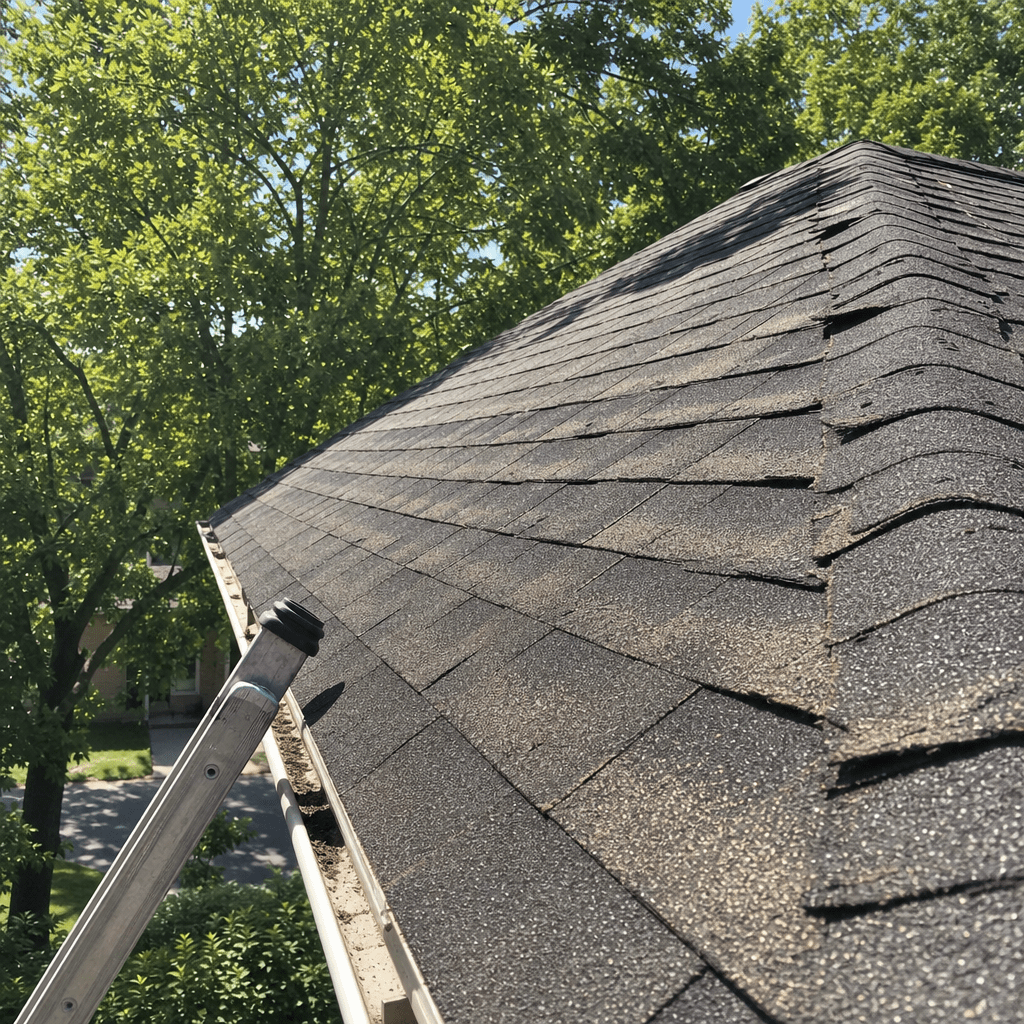
Leaves pile up in roof valleys. A valley is where two slopes meet and water runs down — it’s already the most active drainage point on the roof. When leaves pack in there and hold moisture, they’re creating a dam. That water sits longer than it should, works its way under shingles, and you’ve got a problem by the time the snow melts in March.
Branches hanging over the roof are another one. Squirrels and raccoons will use those to get onto the roof, which causes its own issues — but more than that, branches rubbing against the shingle surface wear the granules off in specific spots over time. Trim them back before winter. It’s one of those small maintenance moves that pays off.
Winter: Freeze-Thaw Is the Quiet Killer
Ice Dams Form When Heat Loss Meets Cold Edges
Illinois winters are hard on roofs in a way that’s less dramatic than a hailstorm but just as damaging. The most common winter roof problem we see is ice damming.
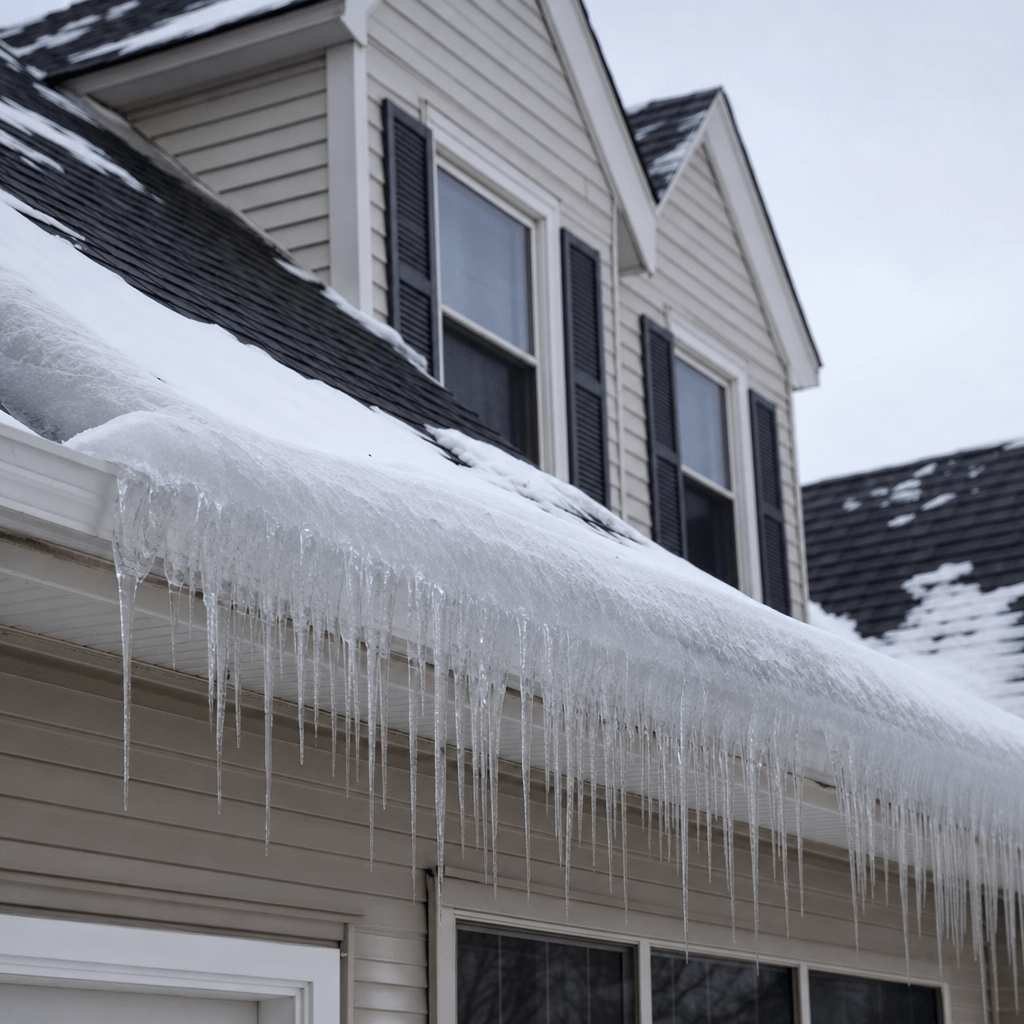
Here’s how it works: heat escapes through the roof deck, warms the upper portion of the roof, and melts snow. That water runs down toward the cold eaves — the part of the roof that overhangs the exterior wall — and refreezes. Ice builds up. Subsequent melt has nowhere to go, so it backs up under the shingles and finds its way into the roof structure and sometimes into the ceiling below.
Ice dams are really an insulation and ventilation conversation as much as a roofing one, but they do real damage to shingles, underlayment, and the structure underneath. If you’re seeing icicles forming along your eave line every winter, that’s worth paying attention to.
Freeze-Thaw Cycles in the Shoulder Seasons
Late fall and early spring, when temperatures swing above and below freezing multiple times a week, are genuinely hard on a roof. Water gets into any existing crack or compromised area, freezes, expands, and makes that opening a little larger every cycle. What starts as a small nail pop or a minor flashing gap can work itself into a real problem over a single Central Illinois winter.
What This Means for Your Roof’s Lifespan
A well-installed asphalt shingle roof in Central Illinois, with a quality product, should give you a long service life. But that lifespan assumes the weather is doing typical weather things — not that every season is working against an already-stressed system.
The homeowners who come to me after years of deferred maintenance are the ones dealing with the biggest bills. The ones who had an inspection after that April hailstorm two years ago, addressed what was found, and kept up with basic maintenance — they’re in a much better position. Protecting the roof you have is almost always less expensive than replacing it ahead of schedule.
If a storm already hit and you’re wondering where you stand with a claim, I’d point you toward our overview of navigating the insurance claims process. That’s an area where having a former adjuster in your corner makes a difference.
For everything related to storm damage repair in Central Illinois, the storm damage hub is a good place to start.
Talk It Through With Us
Every roof in Central Illinois is dealing with all of this — usually without the homeowner ever thinking about it. If you’ve got questions about where your roof stands, or you just had a storm come through and want to know what you’re looking at, give us a call. I’m happy to talk through it.
Frequently Asked Questions
How often should I have my roof inspected in Illinois?
Generally, once a year is a good baseline — and after any significant storm event on top of that. Spring and fall are both good times to schedule an inspection. Spring catches whatever winter left behind, and fall catches anything that needs attention before ice and snow arrive. You don’t necessarily need a full report every year, but having someone up there who knows what to look for is worth it.
Does Illinois weather void my shingle warranty?
Usually not on its own. A manufacturer’s warranty covers defects in the shingle itself, not normal weather wear. Where homeowners sometimes run into trouble is when damage from a storm — say, hail or wind — goes unaddressed and leads to secondary problems. Letting damage sit unrepaired can complicate a warranty or insurance claim down the road. That’s another reason to stay current on inspections and deal with problems when they’re small.
What’s the difference between storm damage and normal wear and tear?
Storm damage is typically a sudden event — hail impact, wind-lifted shingles, a branch coming down. Normal wear and tear is gradual: granule loss over time, shingles drying out and curling from UV exposure, sealant breaking down at the flashing. The reason this distinction matters is that insurance covers storm damage but not wear and tear. A good inspection can tell you which category you’re dealing with, and that shapes what your next steps look like.