

Storm Damage & Insurance
The Types of Storm Damage That Hit Illinois Roofs
A former insurance adjuster walks through the hail, wind, ice, and debris damage most homeowners can’t see from the ground — and how to know when it’s time to act.

Illinois weather doesn’t mess around. Between hailstorms in the spring, straight-line winds in the summer, ice in the winter, and the occasional tornado, your roof takes a beating that most homeowners don’t fully see coming. The tricky part is that a lot of storm damage isn’t obvious from the ground — and what you don’t catch early can turn into a much bigger problem down the road.
I’m Craig Stafford, the residential lead here at Holthaus Roofing in Canton. I’m also a former insurance adjuster, so I’ve been on both sides of the fence — and I can tell you exactly what an adjuster is going to look for when they come out. So let’s start with the question a lot of Fulton County homeowners ask me first.
What Is Considered Storm Damage to a Roof?
Generally, storm damage is any harm to your roof caused by a specific weather event — hail, wind, ice, or debris — as opposed to normal wear and tear that builds up over years. That distinction matters, because it’s the same line your insurance company draws. Storm damage is typically covered; gradual aging usually isn’t. The main types we deal with here in Central Illinois are hail, wind, ice and ice dams, wind-driven debris, and flashing failures. Here’s what each one actually looks like.
For a broader look at how the repair and claims process works, check out our complete storm damage and insurance claims guide.
Hail Damage
Hail is probably the most common storm-related roof issue we deal with here in Central Illinois. And it’s also one of the most misunderstood, because hail damage isn’t always dramatic. You’re not always going to see a hole in your roof.
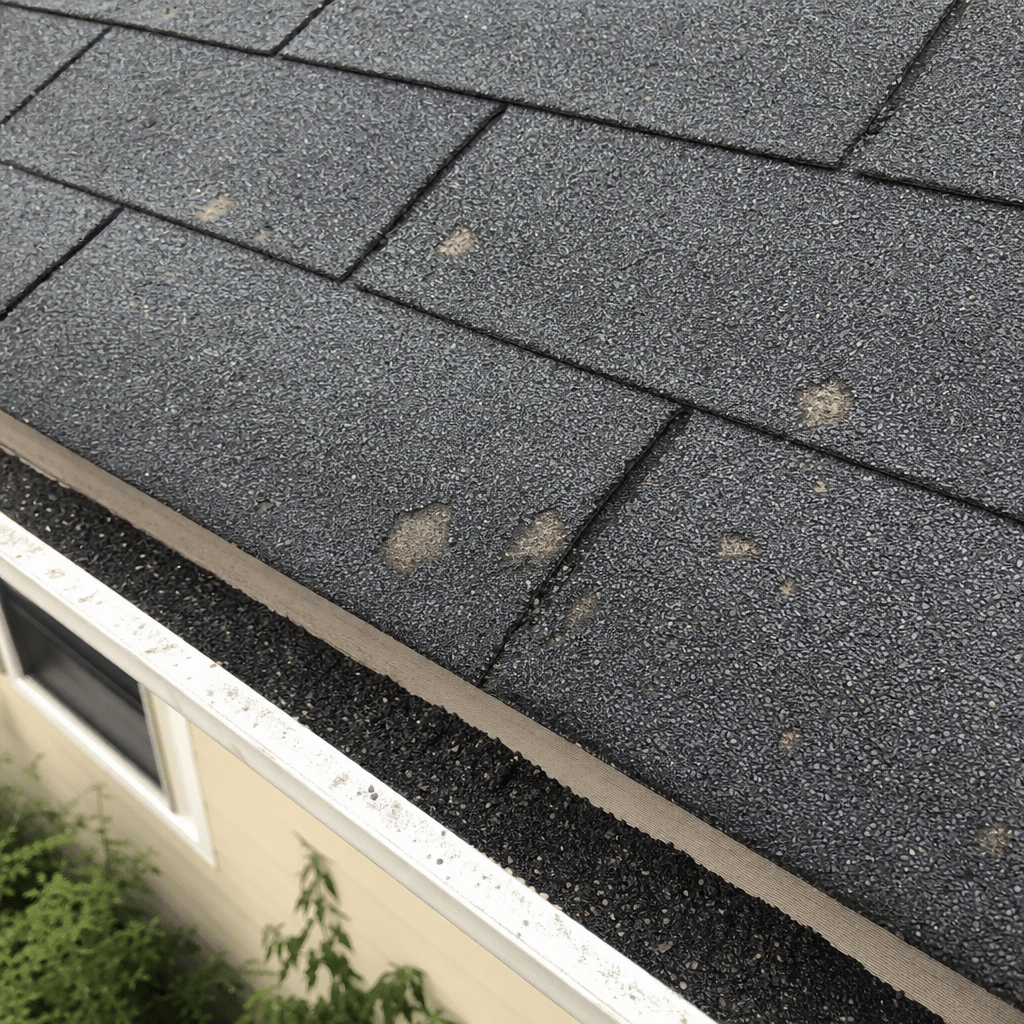
What hail actually does is knock the granules off the surface of your shingles. Granular — think of it like crushed rock or coarse sand — is what protects the asphalt underneath from UV rays and the elements. When hail strips that protection away, the asphalt is exposed and starts breaking down faster than it should.
After a hailstorm, you might notice granules piling up in your gutters or washing down the downspout. Some of that is normal, especially on a newer roof — walking around on the roof, or even just a heavy rain, can loosen some granules that were already sitting loose. But if you’re seeing a significant amount of granular loss in specific impact patterns, that’s a signal that something happened up there.
Hail also leaves impact marks — soft spots, dimples, or bruising in the shingle surface. An adjuster or a contractor with storm damage experience can identify these. I’ve been on both sides of that equation as a former insurance adjuster, and I can tell you that the pattern and distribution of those marks is exactly what an adjuster is going to look at when they come out.
For more on the specific signs — including damage that isn’t visible from the ground — see our post on hidden roof damage after a storm.
Wind Damage
Wind is another big one, and here in Illinois it’s one of the damage types homeowners search for the most after a storm. Straight-line winds, derecho events, and the edges of severe storms can all lift, curl, or tear shingles. Generally, you’ll see this show up in a few different ways.
Missing shingles are the most obvious. If shingles are gone entirely, you’ve got exposed decking, and water is going to find its way in. That’s not a wait-and-see situation.
Lifted or curled shingles are a little harder to spot. The shingle is still there, but the sealant strip on the back has let go. Wind gets underneath, the shingle flexes, and over time the nailing zone gets compromised. Sometimes those shingles lay back down after a storm and look fine from the ground. They’re not fine.
Improper nailing makes wind damage worse — and this is where I’d be remiss not to mention it, because it’s one of the most common things I see after storm chasers come through an area. If a crew nailed your shingles high or used the wrong nail pattern, the first serious wind event is going to test that. Shingles are designed to be nailed in a specific zone, and when that’s done right, they hold. When it’s not done right, wind finds them.
Ice Damage and Ice Dams
Illinois winters bring a different kind of threat. When snow melts and refreezes at the eaves — typically because heat escaping through the roof is melting snow faster up top than it can drain — you get what’s called an ice dam.
The water behind the dam has nowhere to go. It backs up under the shingles, gets into the decking, and eventually shows up inside your home. By the time you see a water stain on your ceiling, there’s already been moisture sitting in places it shouldn’t be for a while.
Ice dams are partly a roofing issue and partly an attic insulation and ventilation issue. A good contractor isn’t going to just address what’s on the surface — they’re going to talk to you about what’s happening underneath. Make sure whoever you bring out understands that relationship.
Wind-Driven Rain and Debris
Sometimes the damage isn’t from hail or wind directly — it’s from what the wind is carrying. Branches, tree limbs, and debris get thrown around in severe storms, and when they land on a roof, they can crack shingles, puncture flashing, or damage the ridge cap.
Overhanging branches are worth paying attention to before storms, too. Squirrels and raccoons use them to access your roof year-round, but during a storm, a branch that’s hanging over the roof can do real damage if it comes down. Trimming trees back from the roofline is one of the better things a homeowner can do on the maintenance side.
Also worth checking after any significant storm: your valleys. Leaves and debris can collect in the low points of your roof, creating a dam that holds moisture against the shingles. That accelerates wear in those areas faster than anywhere else on the roof.
Flashing Failures
Flashing is the metal material that seals the transitions on your roof — around chimneys, skylights, vents, and where the roof meets a wall. It’s a common failure point after storms, both because wind can physically move it and because the repeated stress of weather cycles can loosen the seals over time.
A failed flashing is a water intrusion waiting to happen. The roof surface itself might look completely fine. You’d have no idea from the ground. This is one of the main reasons a post-storm inspection matters even when nothing looks obviously wrong.
What to Do After a Storm
Before you call anyone, it helps to know what you are actually looking at. We walk the ground-level check in order — gutters and downspouts, the soft metal, the roof line in profile, then the attic — in our guide to how to spot roof damage after a storm.
If you’ve had a significant storm come through, here’s the short version: don’t wait. The longer damaged materials are exposed to the elements, the more secondary damage builds up. Document what you can see safely from the ground. Call your insurance company to start the process if you think there’s been significant damage. And get a contractor out who can actually get on the roof and give you a complete picture.
As a former insurance adjuster, I can help walk you through what your adjuster is going to look for when they come out, and make sure nothing gets missed in that process. I’ll advocate for you at the inspection — though I’ll be straight with you, I’m not a public adjuster, so I won’t negotiate your claim for you. What I can do is make sure the damage is documented right and explained in plain terms. A lot of homeowners go through the claims process without fully understanding what’s happening, and that puts them at a disadvantage.
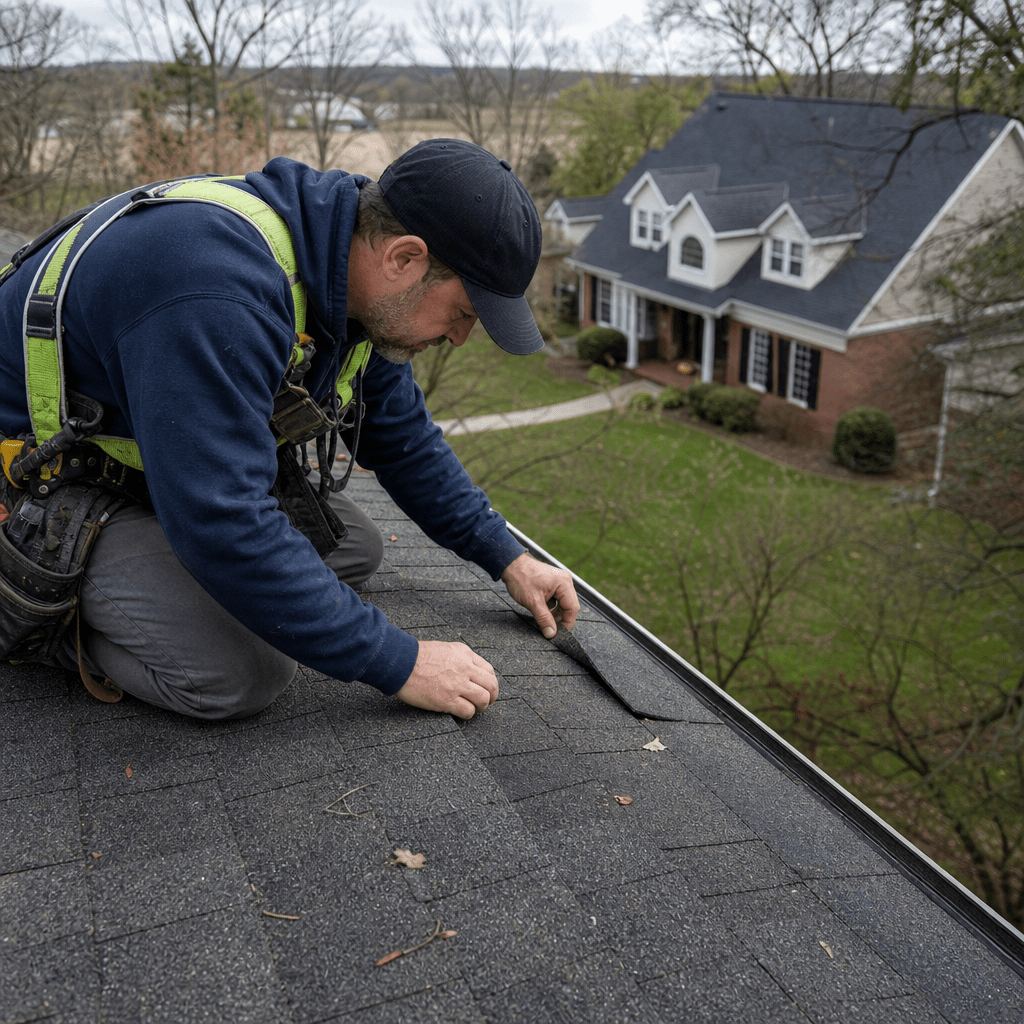
Storm work is residential roofing at its most time-sensitive, and it’s exactly what our residential roofing team handles start to finish — inspection, documentation, and the repair or replacement itself. If you want to understand the full claims side of this, our post on navigating the claims process after a storm walks through that in more detail.
Talk It Through With Us
If you’re a Canton or Fulton County homeowner and you’d like to talk through what you’re dealing with, give us a call. Every situation is a little different, and I’m happy to help you figure out what you’re actually looking at — no pressure, no obligation.
Frequently Asked Questions
What is considered storm damage to a roof?
Generally, storm damage is harm caused by a specific weather event — hail, wind, ice, or wind-driven debris — rather than the gradual wear and tear that builds up as a roof ages. That’s an important distinction, because it’s the same one your insurance company uses: sudden, event-related damage is typically covered, while normal aging usually isn’t. If you’re not sure which one you’re looking at, an inspection from someone who knows what an adjuster looks for will tell you.
How do I know if my roof has hail damage if I can’t see anything from the ground?
Hail damage is often not visible from the ground. The impact marks left by hail — soft spots or bruising in the shingle surface — are something you’d need to be on the roof to identify. Significant granular loss in the gutters after a storm is one ground-level signal. Generally, if you’ve had a hailstorm with golf ball-sized or larger hail, it’s worth having someone get up there and take a look. I’d also check your downspouts and gutters for an unusual amount of granular material collecting there.
What are the signs of wind damage on a roof?
Not necessarily missing shingles. That’s the most obvious sign, but lifted or curled shingles that have lost their seal strip can be just as problematic — and they’re a lot harder to spot because the shingle is still physically there. Wind damage can also show up as compromised nailing zones, where the shingle looks intact but has been flexed enough to weaken how it’s fastened. A good inspection after a significant wind event should catch these even when the roof looks okay from the street.
Should I file an insurance claim for every storm event?
Not always. Generally, you want to file a claim when the cost of repair is going to exceed your deductible by a meaningful amount — and when the damage is clearly storm-related rather than wear and tear. Filing multiple smaller claims can affect your premium. I’d recommend getting an inspection first so you have a real picture of the damage before you decide whether to involve your insurer. That way you’re making an informed call, not guessing.