
If you’re reading this, there’s a decent chance a roofer just knocked on your door, or you’ve got a stack of business cards from crews that showed up after the last storm. You’re trying to figure out who to trust with one of the most expensive things on your house — and you’re not a roofing expert. That’s a stressful spot to be in.
I’m Craig Stafford with Holthaus Roofing. Before I ran our residential side, I worked as a licensed insurance adjuster, so I’ve seen the aftermath of the bad hires — the roofs that leaked six months later, the “companies” that were three states away by the time the homeowner called back. Here are the red flags I’d tell my own family to watch for.

Red flags when hiring a roofing contractor
1. They showed up at your door uninvited after a storm
After a big hail or wind event, out-of-state trucks roll through central Illinois neighborhoods knocking on doors. Some do fine work. Many are here for the storm and gone before winter. If a crew found you instead of the other way around, slow down and check them out. (More on that in our storm damage and insurance guide.)
2. They pressure you to sign fast — or to hand over your insurance claim
“Just sign here and we’ll handle the whole claim for you” is a line I hear a lot, and it’s a warning sign. A roofing contractor is not a licensed public adjuster and shouldn’t act like one. A good one helps you understand your claim and makes sure the damage is documented — here’s how that should actually work — but never rushes you into signing over the process.
3. No local address, references, or track record
Ask where they’re based, who they’ve worked for nearby, and whether their trucks are labeled. A legitimate local company has verifiable references and a paper trail — we’ve been accredited with the BBB since 1995 and licensed in Illinois (#104.007039). A crew that can’t point to any of that is a gamble.
4. They’re vague on the details
You deserve a written scope: the cost, the timeline, the materials, and what happens if they find something once the old roof is off. If a contractor won’t put it in writing or glosses over your questions, that’s usually a sign of what the job itself will be like.
5. They won’t commit to a schedule — or return your calls
If you can’t get a straight answer before they have your money, it rarely gets better after. Responsiveness up front is the best preview you’ll get of how the project will run.
6. Cash only, or a large deposit before any work
A reasonable deposit is normal. A cash-only demand or a request for most of the cost before materials even arrive is a red flag — a real local contractor doesn’t need to front-load your payment.
7. Hand-waving about the warranty
There are two warranties that matter: the manufacturer’s on the materials, and the contractor’s on the workmanship. Get both in writing — and ask the question that matters most: will you still be here to honor it in two years? The storm-chasers can’t answer that one.
8. Corners you can’t see from the ground
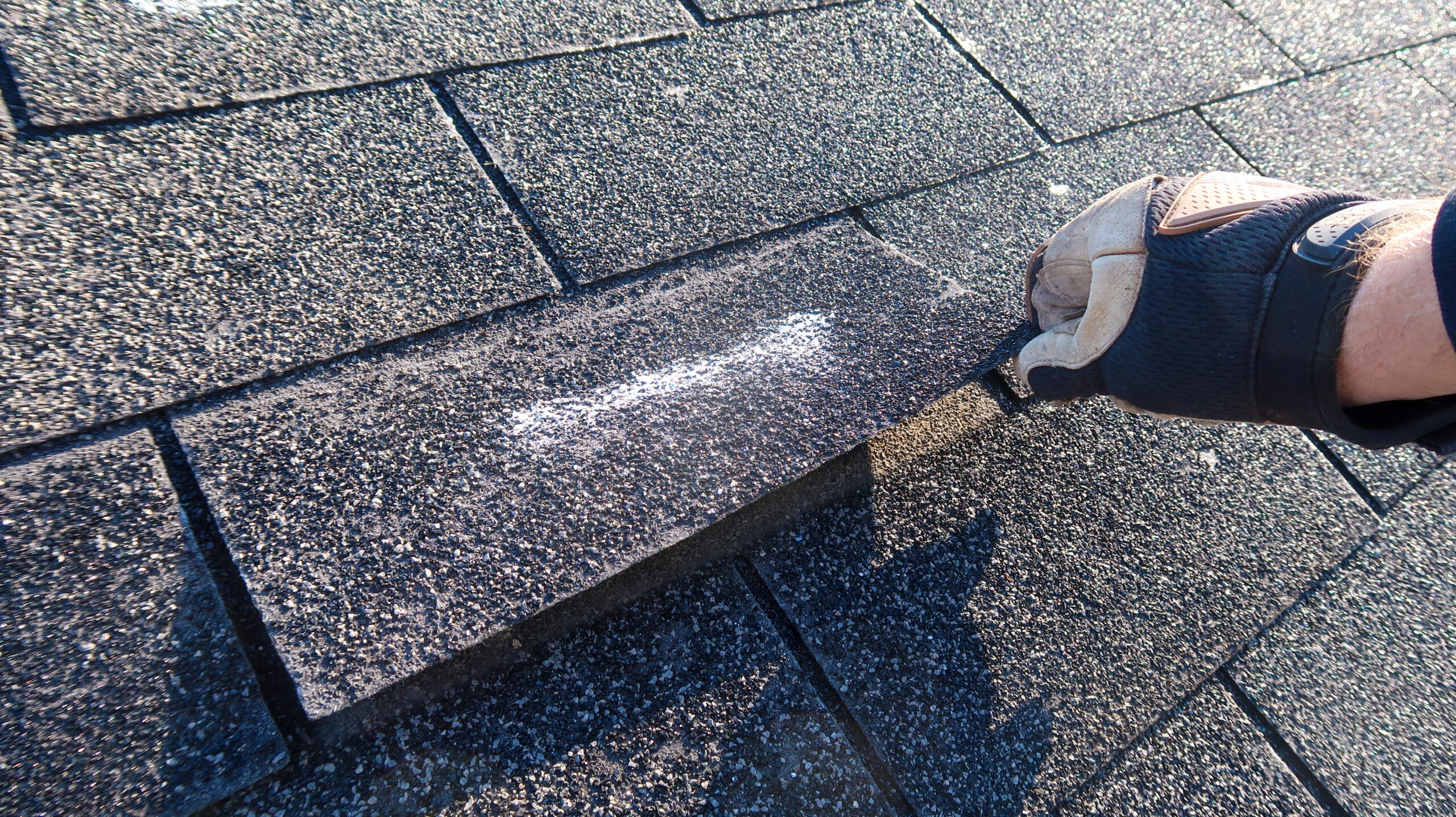
This is the one that costs people. Wrong nail placement or shingle exposure, skipped underlayment or flashing, sealant slapped over a problem instead of fixing it. You won’t spot it from the driveway, which is exactly why it matters who’s on the roof and whether they install to the manufacturer’s spec.
How to vet a roofer the right way
Flip every red flag around and you’ve got your checklist. A contractor worth hiring is licensed and insured, has a local track record and references you can call, shows up labeled and on time, puts the scope and both warranties in writing, and installs to spec because they’ll be the ones standing behind it. We’re Duro-Last Elite and CertainTeed ShingleMaster PREMIER, and we work with homeowners and businesses across central Illinois — on the residential and commercial side alike.
Talk it through before you sign anything
If a roofer showed up after a storm and you’re not sure about them, call us first — even just to talk it through. There’s no pressure, and I’d rather answer your questions than see you get burned.
Get a free, no-obligation assessment or call 309-647-9209.
Red flags when hiring a roofer: quick answers
What are the biggest red flags when hiring a roofing contractor?
The clearest warning signs are a crew that showed up uninvited after a storm, pressure to sign or hand over your insurance paperwork on the spot, no local address or references, a cash-only or large-deposit demand, and vague answers about the written scope, timeline, and warranty. Any one of those is a reason to slow down.
How do I know if a roofer is cutting corners?
You often can’t see it from the ground, which is why it matters who’s up there. The common shortcuts are wrong nail placement or shingle exposure, skipped underlayment or flashing, and reused old materials. Ask who the crew lead is, whether they follow the manufacturer’s install spec, and whether they’ll document the work with photos.
Is an out-of-state roofer going door-to-door after a storm a red flag?
It should put you on alert. Plenty of storm-chasing crews do fine work, but many are gone by the time a problem shows up. If they can’t give you local references, a labeled truck, and a real answer about who honors the warranty in two years, keep looking.
Should I pay a roofing contractor a large deposit up front?
Be cautious. A modest, reasonable deposit is normal; a large cash-only demand before any materials arrive is a red flag. A legitimate local contractor doesn’t need your full payment before the work starts.
How do I check that a roofing contractor is legitimate?
Confirm they’re licensed (ours is Illinois #104.007039), insured, and have a real track record — BBB accreditation, verifiable local references, and labeled trucks. Ask the question that separates the good from the storm-chasers: will you still be here when I call in two years?